
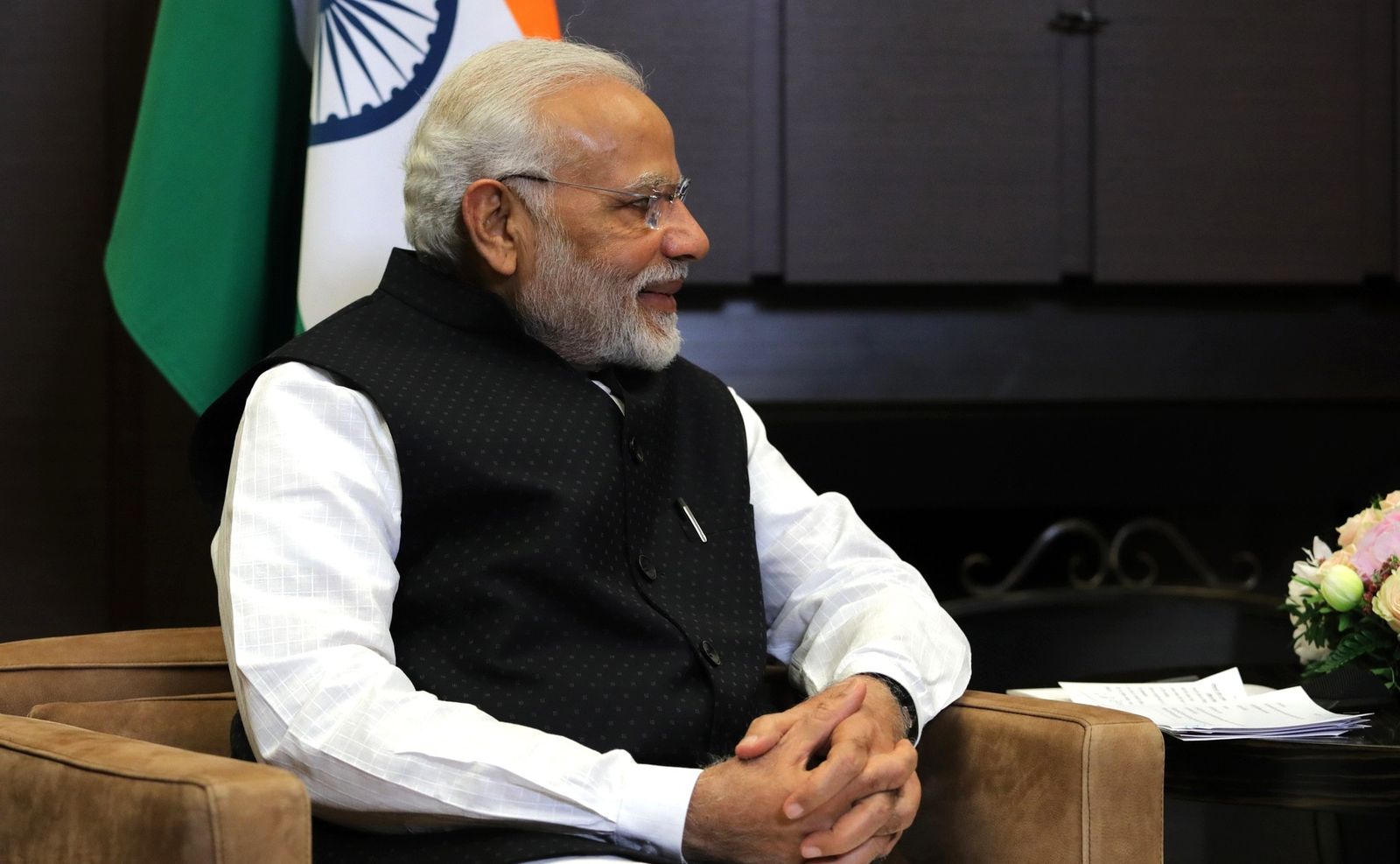
Concern over prime ministerial candidate Narendra Modi is justified as India looks set to appoint a staunch Hindu nationalist as its leader and representative on the global stage
The Indian electorate is approaching the last phase of polling in the 2014 General Elections. Many journalists and election experts are calling this election the most significant in India’s history. Is it mere journalistic hyperbole? Not quite, I believe. Because when every section of the populace of the world’s largest democracy in the world stands polarised by one man it deserves more scrutiny than the occasion usually demands.
India is in dire need of deep structural changes to economic policies; a promise that Narendra Modi could possibly deliver on. But can electing a leader who inspires fear rather than faith in minorities portend a solid future for India? In a country that is perennially on the edge, imploding every few years, how would Modi handle further riots or full-blown conflict with Pakistan? If India chooses Modi as the prime minister, the decision will surely affect the global discourse on secularism and the marginalisation of Muslims.
Modi, the self-proclaimed Hindu nationalist, has been in many ways shaped by the organisation that coached and conditioned him since his teenage years. The Rashtriya Swayamsevak Sangh (RSS), with its atavistic vision of India as a Hindu nation, raised Modi within its cauldron, and hardline religious nationalism is at the core of the man that Modi is. But when the untruth of his miracle work is bandied about for long enough, it becomes accepted as truth. So now, Modi is a hero – manufactured with the assistance of the media and the unyielding support of a big section of corporate India.
The broadcast media with its penchant for puffery excitedly took to the clever moniker NaMo, which by no accident, is also part of a Hindu chant asking followers to prostrate in honour of Lord Krishna. Such is the incantation of NaMo’s political mantra, that it awakens the dormant ultra-Hindu even in otherwise balanced and well-travelled Indians. As for the corporates, his rule promises to heighten the stakes for big businesses in deciding government policy (replicating the Gujarat government’s deals with corporate giants like Reliance and Adani) and that is an enticing prospect for India Inc., which is leveraging its influence and funds into crafting the Modi-wave.
Modi himself, however, is resting on statistics that he promulgates at every opportunity. Highly malleable macro-economic figures are used to showcase Gujarat as the dream state – the ideal role model for every other Indian state. That research has proven that development in Gujarat pre-dates Modi’s accession to power in the state, and indicates that Gujarat is lagging in indices of social development, are facts that lose their sheen when he takes to the stage to address thousands of individuals in his rallies across the country. His rejoinder to any data that dares to draw conclusions different from his account and indict him of falsehood is simple – that it is all a conspiracy to disparage Gujaratis and all that they are capable of.
The orator in Modi comes alive in open fields – his soliloquies are recited in an intonation, delivered to draw loud applause from his audience. This charm wanes in settings demanding closer proximity and interactivity, like a studio or a college, where his audience is knowledgeable and cannot be shepherded into clapping at the right pauses, so he has studiously avoided them as far as possible. In fact, he holds the distinction of being a prime-ministerial candidate who abruptly stopped a television interview with a senior journalist because he did not want to answer questions around the 2002 Gujarat riots. A recent interview he did occupied headlines again because the news editor allegedly resigned over its “fixed” nature. The news report remains uncorroborated, as expected.
It is not just his complicity in the horrific pogrom against Muslims in Gujarat that scares me about Modi being at the helm of Indian polity. (It does not really matter what the judiciary rules in this case. The evidence, both material and human has long been destroyed). It is his genuine belief that the riots were simply a causal reaction to Hindu deaths that is unsettling. His followers have a ready defence – that this genocide has its equivalent in Indian history when Sikhs were massacred in riots orchestrated by the Congress, following Indira Gandhi’s assassination. If Congress can assume leadership at the centre in spite of that, then why must Modi be denied a chance? A large number of Indians, by that logic, have reconciled to their country being led by mass-murderers. Term after term.
Everything is normal in Gujarat, we are told. Muslims too have rallied behind Modi because of the business and jobs he has brought into the state. But I am unsure if the instinct of being outsiders in their homeland, which has slowly penetrated into their subconscious, can ever be put to rest.
My parents live in Ahmedabad in Gujarat and we were once at a swanky mall, being pitched the membership of an elite club in the city by a particularly persuasive young marketeer. We succumbed and bought his offer. After congratulating us on our (not so) prudent decision, he beamed at us and asked a most startling question: “After seeing me talk for an hour, did any of you realise that I am a Mohammedan?” We had not anticipated this and merely shook our heads to indicate we hadn’t noticed his religion at all. He seemed very pleased with himself. I have not been able to stop thinking about the psyche of that educated, urban, middle-class Gujarati. What assurance did he need? That he looked and spoke just like the rest of us? What can we say about normalcy when a Muslim is happy not to have betrayed his religion in a perfectly routine interaction?
The travesty is that we do not have much of a choice. For a decade we have had a prime minister who declined to break his silence – be it on corruption charges, multi-million dollar scams or unabated rapes. Now, we look poised to bring in a prime minister who will most certainly speak, but whenever it suits his whims and fancies, with the people he cherry-picks and disseminating the message he wants. Dissent, it seems, will be disallowed.
History repeats itself, Marx had said. First as tragedy and then as farce. I am fervently hoping India’s future narrative rids itself of this motif.
Photo Credit: Wikimedia Commons
.jpg)