Ominous opening credits theme ebbs
to silence. Fade in: shaky-cam footage
from various news agencies; a montage
establishing time, place and the threat
unfolding unstoppably on a global scale.
Headlines whirl. Graphs and charts stamp
stark projections onscreen. Editing ramps
up urgency, drama, the stakes. The tale
about to unfold is one of humanity
at its worst and best. The selflessness
of carers and keyworkers put to the test
and emerging heroic. Cut to: the inanity,
the dithering, the bullshit of those
in high office, the Etonian provocateurs
bluffing and blustering, pitifully unprepared
for a crisis that can’t be diffused
by three-word slogans and posh-boy jeers
during PMQs. We’re on shaky ground.
Any half-aware test audience crowd
would demand a hero they can cheer,
not some Greek chorus of doorstep applause
curtailed in the second act as too political.
This floundering narrative is antithetical
to mainstream cinema. It’s like Star Wars
from the POV of an admin assistant filing
the performance review of a storm-trooper
who got shot two scenes ago, or the blooper
reel from a public information film on tiling
or basic plumbing for beginners. It’s not
the film you paid your money to see.
You didn’t pay to watch the idiot-in-chief
ignore the science, grin deathlessly, toss off
some half-arsed soundbite, execute
a soft-shoe sidestep from responsibility.
Whither the nurses, shop workers, delivery
drivers – the real heroes? Let’s reboot
the project, focus on them; let’s weave
multiple stories, Short Cuts style, celebrate
the under-appreciated, the underpaid;
let’s give the audience a reason to believe,,
a grand finale. Let’s put a Hollywood spin
on this year-long real-time clusterfuck,
flip the narrative, double-down on feelgood;
rewrite, recast, re-edit. We can do this thing.
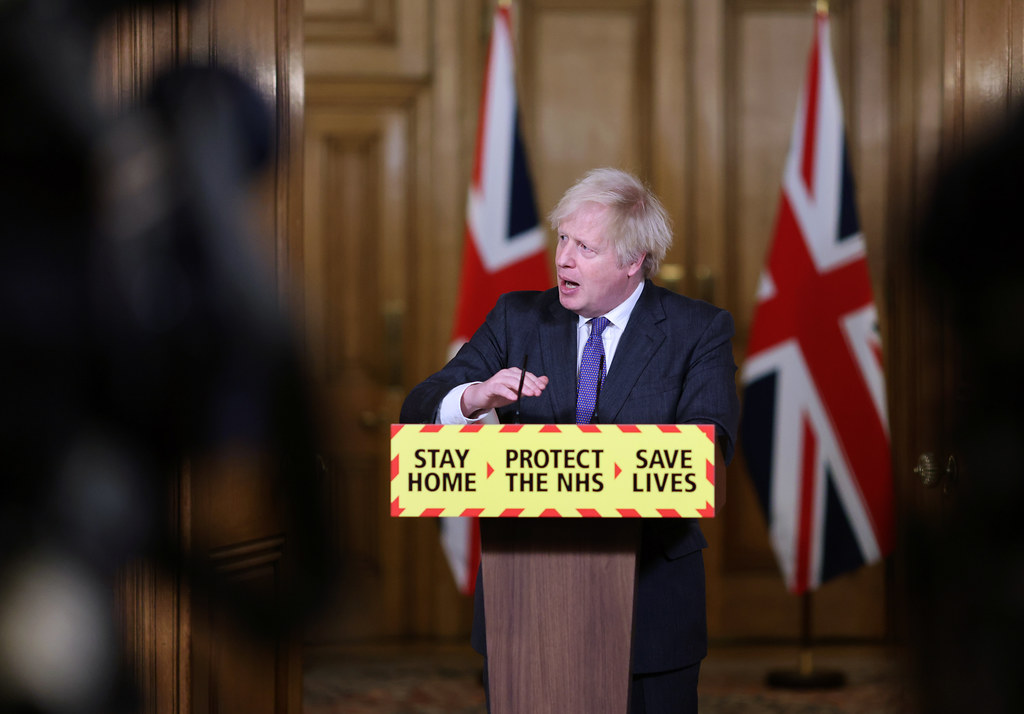
Photo Credit: Andrew Parsons / No 10 Downing Street