The mission to audit Puerto Rico’s public debt comes with its own political challenges
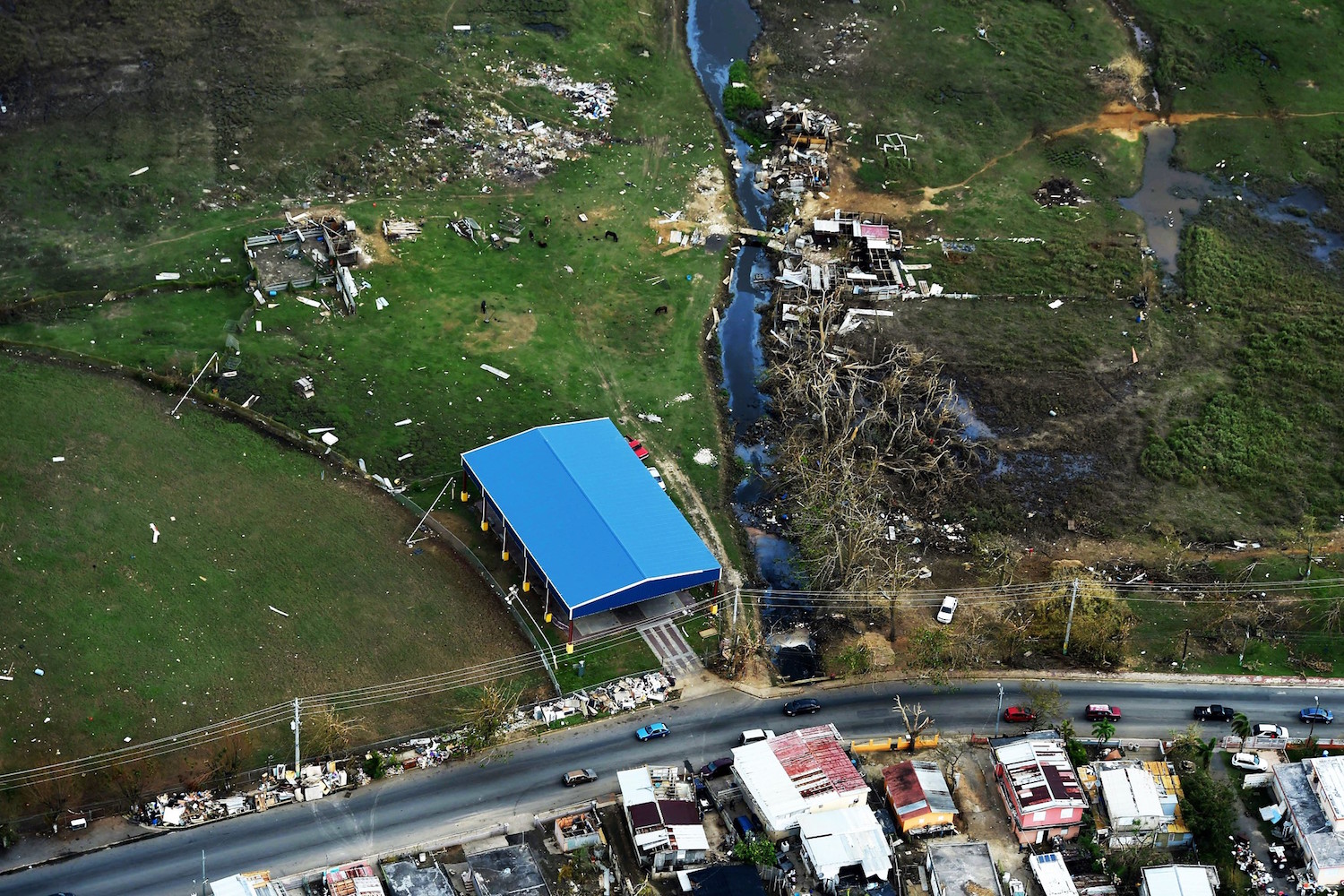
Despite President Trump scoring his administration’s response a perfect “10”, the conditions on the ground in Puerto Rico could not be starker more than one month after Hurricane Maria. About one-fifth of Puerto Rican households lack drinking water and only about 40% of the power grid has been restored, while communications remain dismal. Due to the inadequate response on the part of both the federal and territorial governments, Puerto Ricans have been self-organising community recovery efforts.
In the context of this post-disaster humanitarian crisis, exacerbated by the pre-existing debt and economic crises and years of austerity and colonial neglect, Puerto Rico’s looming $74 billion public debt has received renewed media attention. However, media accounts often overlook the established struggle for a public debt audit that preceded the hurricanes and demanded a similar scrutiny that would conceivably lead to some debt relief. An integral public debt audit would untangle a complicated web of debt relations and determine who owns what, the kinds of mechanisms used to contract public debt, and what the funds were used for. In the wake of Hurricane Maria, politicians and creditors unleashed a slew of ambiguous claims, ranging from a total debt wipeout and new debt swap schemes for the electric utility, to a congressional “aid package” via new debt with supposed priority for repayment over all existing obligations.
Law 97 of 2015 established the official ‘Commission for the Integral Audit of Public Credit’. Comprised of 17 people from the public and private sectors, labour, and academia, the objective was to audit the public debt and ensure that Puerto Ricans were not paying back debt that could instead be nulled. On the surface, an audit may seem like an ordinary and bureaucratic measure but, in Puerto Rico’s case, it is highly politicised. The multi-sectoral Commission would have evaluated how Puerto Rico’s 18 public entities contracted debt over 40 years of emissions, the role of financial institutions, and how public entities executed debt-financed projects. This would determine any illegal, unconstitutional or illegitimate debt relations before voluntary creditor renegotiations or legal debt restructuring took place. The audit process would, further, defend access to public information, transparency and accountability on the part of public officials and bankers who may be implicated in questionable debt emissions.
The Commission found multiple irregularities in two preliminary reports published in 2016. Independent organisations also found reason to audit the debt and cancel a good part of it. Researchers for the ReFund America Project, under the Action Centre on Race and the Economy (ACRE), for example, concluded that nearly half of the public debt is not debt at all, but rather future interest on predatory loans called capital appreciation bonds (CABs). Another report argues that about $3 billion of the public debt is illegitimate issuance fees and capitalised interest on “scoop and toss” deals.
The unelected fiscal control board overseeing Puerto Rico’s finances and fiscal policy has repeatedly claimed that an audit is a waste of time and money. This opposition comes as no surprise, as the audit would investigate bond emission and underwriting practices that some members oversaw and profited from. The Hedge Clippers, a coalition campaign to expose the mechanisms of hedge-fund profiting and “billionaire-driven politics”, revealed that two control board members in fact have conflicts of interest stemming from the “revolving door” between Santander Bank and Puerto Rico’s Development Bank. Despite mounting debt incredulity and conflicts of interest, the government held back designated audit funding and in April 2017, Governor Ricardo Rosselló eliminated the official audit Commission, effectively squashing a state-legitimated audit process. At the expense of Puerto Rican taxpayers, the control board recently contracted a legal firm to “review” part of the debt after pressure from multiple creditor groups in bankruptcy court, but credibility concerns invalidate this costly effort.
The grassroots support for the audit, however, was only strengthened by the legislative dismantling of the audit Commission. This struggle to defend access to public information and government accountability seems all the more relevant under conditions of tenuous democratic rights and economic uncertainty exacerbated by the hurricanes. The Citizens’ Front for the Debt Audit, a group that formed in support of the official audit Commission, amplified its efforts and is undertaking a citizens’ public audit, for which it is has been raising funds and soliciting participants. The group sponsored a petition calling for the debt audit that reached 140,000 signatures, demonstrating this claim’s broad appeal. Even the University of Puerto Rico’s student movement, which led a cross-campus 10-week strike during the spring 2017 semester, endorsed a debt moratorium and integral public audit as one of its major demands.
Creditors that invested in Puerto Rico’s municipal bonds comprise a diverse group. While all bondholders may not have engaged in unscrupulous practices, the creditors most apt to take a “haircut”, or reduced value, for serious debt relief should be those that accumulated unfettered and speculative profits from suffering in Puerto Rico and beyond. In the wake of hurricanes Irma and Maria, reports have revealed new details of mysterious bondholders with tremendous political clout and troubling track records. For example, a class of bonds called COFINA was purchased under Shell company subsidiaries to shield hedge funds like The Baupost Group from public scrutiny – until now. Out of the 30 known firms vying for debt repayment in bankruptcy court, 24 have been identified as “vulture funds” that specialise in risky distressed debt. A number of these vulture firms also profited from the Argentinian and Greek financial crises and the U.S. sub-prime mortgage crisis.
Puerto Rico faces a massive recovery that magnifies the importance of a full and transparent debt audit. The audit and post-disaster debt relief are part of the broader struggle of Puerto Ricans, both at home and in the diaspora, to organise a just and transformative recovery that puts “the people before the debt”, as many activist groups demand. Rather than normalise the public debt in post-hurricane relief discussions, the established debt incredulity should be front and centre.
Photo Credit: US Department of Agriculture via Flickr