How this year’s A-Level results revealed the glaring class inequalities in our education system perpetuated at the top.
On A-level Results Day I was fairly confident – I had worked consistently hard and trusted my teachers to know which grades I deserved. I was also aware that I went to a grammar school in an affluent area, so the blatantly classist system would work in my favour.
I was fortunately able to get the grades I expected and was able to get into Cambridge University, but I soon realised I was mistaken. In our school, half the students had their grades downgraded – we were a state school and couldn’t escape the system after all.
The cursed algorithm affected almost everyone – I looked around me and talented students with such great potential had been cruelly belittled by the pervasive system. What this system and its defenders showed us was that we are a society that believes in numbers over people. We thought we could simply judge each student by the place they live and the students that came before them and calculate it into a grade. No measurement of the hard work, revision hours, quality of teaching, stress, breakdowns and tears that actually go into A-levels was offered. And rightly so, because there are some things you simply cannot measure.
This obsession with quantifying is already present in the normal grading system. Defining a student’s worth by a letter or a number is justified to increase our competitiveness in relation to other countries, such as the likes of Singapore. Not even our overwhelmingly state-funded schools are free from the narrow shackles of capitalist enterprise. The mantra of “get good grades – go to a good university – get a good job” that we feed our children from the very start of their lives reveals nothing of the values we should really be holding in education; the joy of learning and personal development. All of that gets drowned away under the crippling pressure of anxiety-inducing exams (largely without coursework) that practically destroys mental health.
Imagine all of this at the same time as attending an under-funded college, in an area with no job prospects, where most people end up working for low wages in the insecure service sector, university degree or not. On top of this, you might be juggling part-time jobs or care work while struggling through A-levels like everyone else. You might be marked down by teachers from the implicit prejudices that arise from the colour of your skin. Still, many people are able to put in the extra effort and break through the obstacles that should never have been there in the first place. All this new grading system has done is reflect the already classist education system we have, putting it blatantly out in the open.
This time with the case of the algorithm, however, it was different, because students weren’t even able to try. Our grading system has always been unjust, but, since birth, it has been instilled in us that if we just worked hard enough we’d be able to “make it” in the world. Of course, this was always a farce. Writer of Chavs, Owen Jones, dates this individualist every-person-for-themselves belief to Margaret Thatcher’s destruction of the trade unions. It is no longer fashionable to want to improve the prospects of the entire working class by respecting their work and ensuring their jobs are well-paid and secure. It is fashionable for students from working-class backgrounds to “rise up” and break class barriers. There are more provisions to help students from poorer backgrounds to get over the hurdles than eliminating the hurdles in the first place.
It was these working-class heroes that lost out the most following this year’s Results Day – the ones who toiled through all the unfair obstacles in their place in the hope of a better future. Many people argue that these people would be able to retake their exams and defer their offers, but A-levels can be traumatic and costly, not to mention nobody has been able to attend college since March. Some schools finished the course with their students through online classes, and even offered help with university admissions (the private schools); others were left with nothing (the state schools).
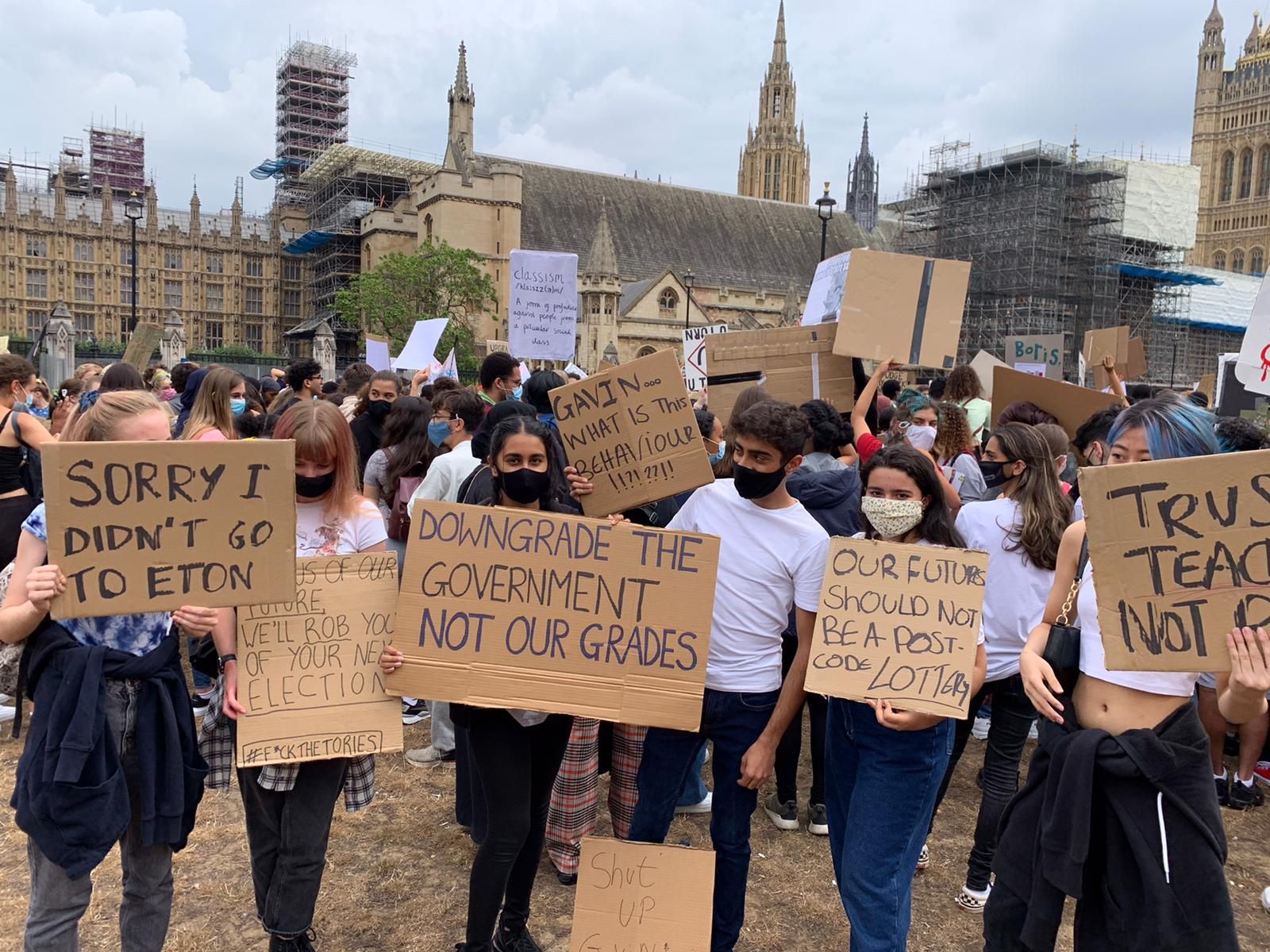
Many like our Prime Minister Boris Johnson, who went from Eton to Oxford, would never be able to sympathise with the realities of those who were downgraded – who were told by Ofqual and the government that their future prospects would be defined by their postcode. It showed the hypocrisy of a government and a society that sings the praises of “social mobility”. Tony Blair’s famous declaration of “we’re all middle-class now” has been shown for the utter lie that it always has been. We will never be able to rectify the class inequalities that have been revealed earlier this month if we keep denying that class exists.
However, just like in Scotland, we the students spoke out. We mobilised. We showed the government that being young doesn’t mean being silent. Young people are often at the heart of protests for change – the climate strikes and Black Lives Matter protests come to mind especially – yet we are still wrongly labelled as apathetic by politicians. It is difficult to keep faith as an activist when battling with a system so determined to silence you, but the latest government U-turn shows that there is hope. If we keep exposing the lies of the government, and of our classist society in general, we can make change.
The global coronavirus pandemic calls for wider institutional change in all sectors. We watched as Priti Patel’s “low-skilled workers” quickly turned into society’s “key workers”. Education should be no exception. Yes, the glaring classist algorithm was defeated this year, but we must continue to address the subtle inequalities of the system that will still exist next year. We won’t let the government conveniently deny the existence of class issues. Only when we abolish the horrific capitalist values that have invaded our lives – the quantifying of people’s value, the incessant competition with our peers, the ruthless lack of empathy in Thatcher’s “there is no such thing as society” world – can we create a more equal and kinder society. I refuse to defend an unjust system, even if I’ve benefited from it, and I hope that this is the kind of politics my generation will inspire.
Photo Credit: Jasmine Glenister