
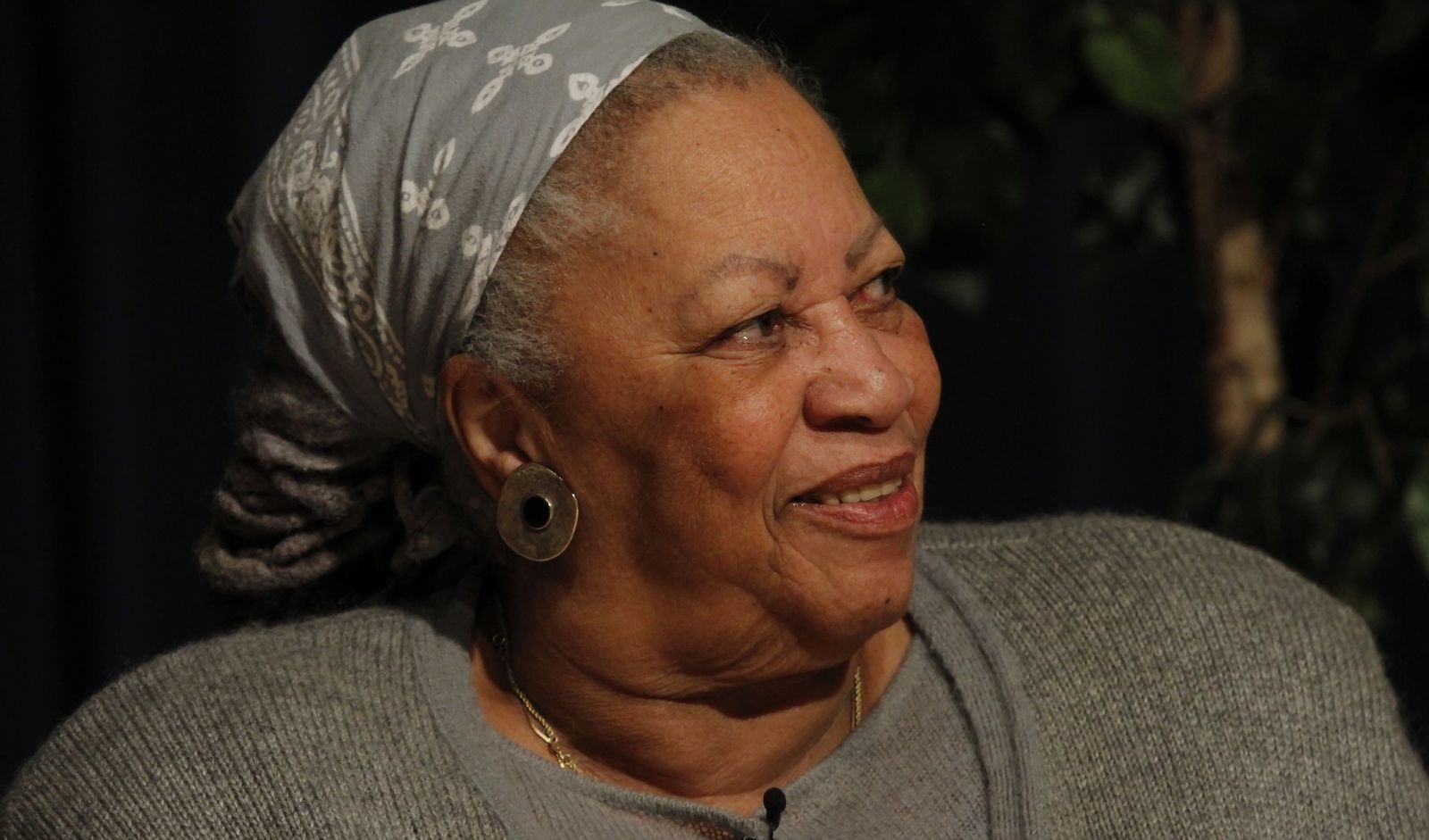
How Toni Morrison taught us to build the world in the midst of ashes
The literary world lost its most important writer of the past century this month when Toni Morrison, Nobel Laureate and winner of the Pulitzer Prize for Fiction, died at the age of 88. In the words of Dionne Brand, whose reflection on Morrison you should read, “Toni Morrison was the greatest writer in English of the 20th century and the 21st”.
Perhaps best known for her novel Beloved, whose story is inspired by that of Margaret Garner, a fugitive slave mother who killed her children rather than have them taken back into slavery, Morrison was prolific. She published 11 novels, two plays, a libretto, multiple children’s books and countless essays and speeches, many of which are collected in 2019’s The Source of Self-Regard: Essays, Speeches, and Meditations. Morrison’s fiction exemplifies an excellence in literary and aesthetic craft, and is equally sophisticated in its rare, deep political and philosophical insight. One of my favourite sentences ever comes from A Mercy, a novel with a shifting setting in the North American colonies at the end of the 17th century: “Scully saw dark matter out there, thick, unknowable, aching to be made into a world.” This sentence lingers in the ear and weighs on the tongue – the commas slowing it down, drawing out the sensation of ‘aching’ towards active creation out of an inchoate and painful history, which the novel as a whole distils through its connected but disparate characters. Equally important to that sentence’s aesthetic beauty is its articulation of the very project in which Morrison was engaged in her life’s work: world-making.
In an interview shortly after the publication of Beloved, Morrison asserts, “Slavery broke the world in half.” Writing in, from and for a broken world, Morrison’s language – equal parts beautiful and devastating – seeks not merely to describe, to paint a picture, but to make a world. And not just in the pages of the novels. When Morrison imagines the interior life of Beloved’s Sethe, she fundamentally challenges the world in which she and her readers meet through her language at the same time as she is building a world for her fictional characters. Where the historical archives have only recorded slave histories as property gained and lost, Morrison dares to imagine life through her writing. The most powerful lesson I have learned from reading her work is that writing and language can be a vehicle for building the world anew in the midst of ashes.
One of Morrison’s most-often repeated quotes is, “the function of freedom is to free somebody else,” and her life’s work testifies to this ethic. Had she “only” gifted to us her fiction, Morrison would have left an immeasurably influential mark. But she was not only a writer; she was an editor as well. While working at Random House, Morrison helped usher now well-known black authors into wide readerships, including Gayl Jones, Toni Cade Bambara and Angela Davis. One of her most important projects was the publication of The Black Book, an anthology-collage of black life in North America from slavery through the early 20th century. Between her editorial work and her profound, brilliant literary criticism – indeed, Playing in the Dark: Whiteness and the Literary Imagination is an indispensable theoretical text – Morrison exemplified black feminist praxis which seeks not merely equality within the existing parameters of the world, but a new world altogether, built not for and/or by one exceptional individual, but for and by multitudes.
Famously, Morrison declared unequivocally throughout her career that she wrote for black people, especially black women, and one of the most important aesthetic and political aspects of her writing is its absolute refusal to perform for the white gaze. She neither genuflects to it nor fights it. Instead, her language conjures possibilities for black life to exist and mean in a world without being “thrown against a sharp white background”, in Zora Neale Hurston’s famous words. This refusal of the white gaze opened intellectual space for Morrison to be one of the most important American philosophers of race since W.E.B. DuBois and Anna Julia Cooper, and all of our collective thinking has been enriched by it.
If you had not read Morrison’s work before learning of her passing, there are dozens of possible starting points. In addition to Beloved, you could not go wrong reading Sula, Song of Solomon or A Mercy. You will likely want to read more as soon as you finish one. Just beware the feeling of “finishing” one of her novels. Her work will teach you that an ending is only an ending if you are not looking, listening or otherwise attending carefully enough.
I wrote earlier of one of my favourite sentences Morrison wrote, and I want to end with a word on my favourite character, not only in Morrison’s work but in any fictional world: Pilate Dead in Song of Solomon. Without spoiling Pilate’s story, she is described by another character observing, “without leaving the ground she could fly”. There is no piece of language that has stayed marked in me as vividly as this. What does it mean to fly without ever leaving the ground? I see this as a profound question about what it means to live in the world and make community with others, and I think about it every day. And I think that Morrison was able to approximate this paradox embodied by her fictional character. Without ever leaving the world, she soared and shaped – shapes – it.
Photo Credit: Mike Strasser via Flikr