
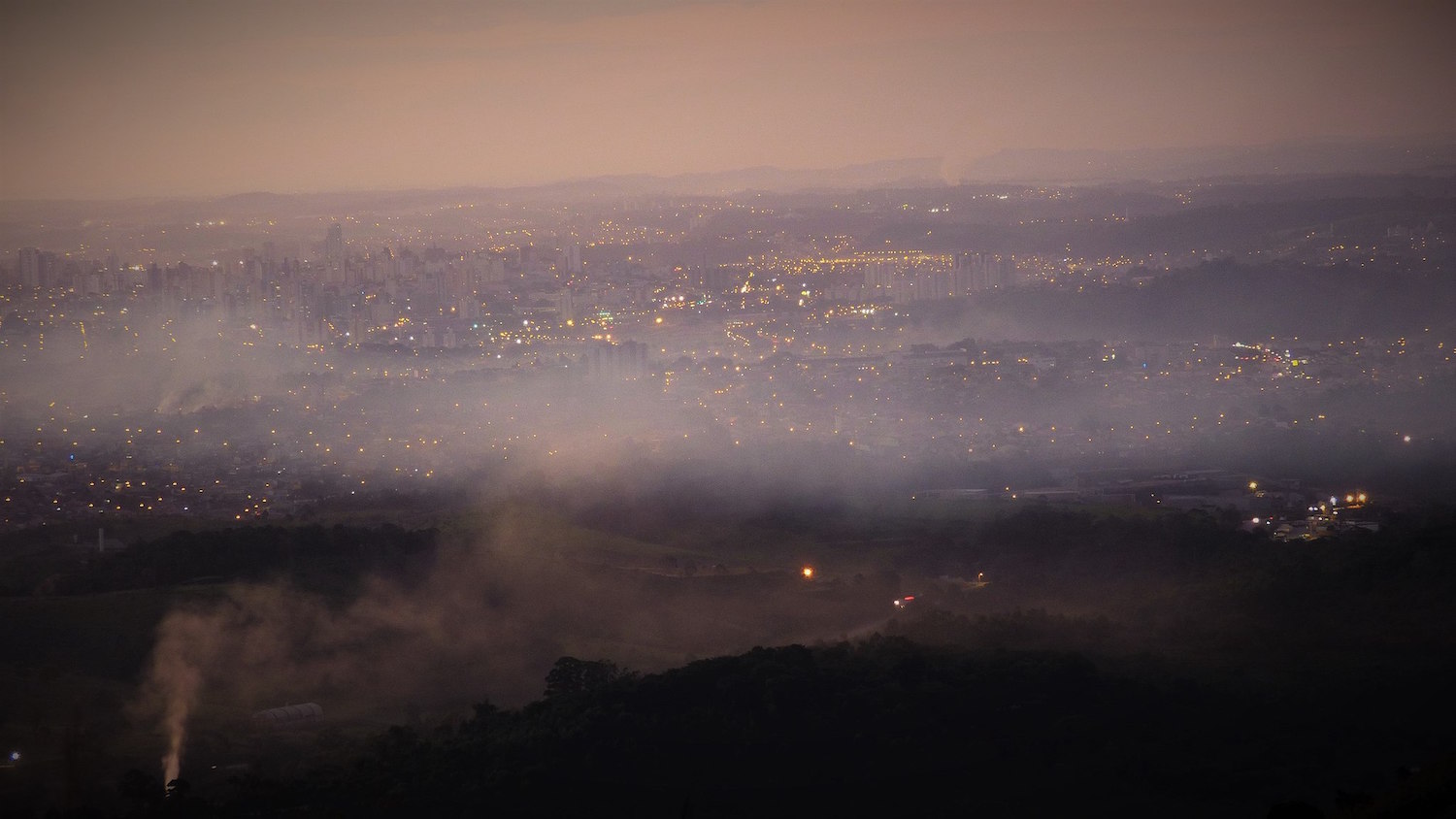
The sight of the burning Amazon rainforest and the dark smoke descending on Brazilian cities brings President Jair Bolsonaro’s anti-environment policies closer to home.
On the 19th of August, the skies of Sao Paulo went dark at 3pm.
The image resembles a scene from a dystopian sci-fi movie. Twitter users compared pictures of the city to the setting of Netflix series Stranger Things. For others, the darkness descending on Sao Paulo could be a metaphor for Brazil’s political climate. But the apocalyptic image is, unfortunately, literal. The dark smoke turning day into night is as real as the anti-environmental policies adopted by the country in recent months. Researchers have pointed out the link between wildfires and the smoke taking over the sky in Sao Paulo this week. Memes, including President Jair Bolsonaro as Marvel’s superhero ‘Storm’, appeared on social media where many voiced fear and concern for the Amazon forest. The daytime blackout in Sao Paulo has turned the hashtag #PrayforAmazonas into the top global Twitter trend at the time of writing, and has triggered debates about the future of the world’s largest rainforest.
The disaster comes after Norway followed Germany in suspending its contributions to the Amazon fund when President Jair Bolsonaro decided to change the rules for administering the fund. After recommending that people “poop every other day” to save the environment, Bolsonaro took Norway on for whaling and suggested that Angela Merkel use the money to reforest Germany. Although Bolsonaro responded to Norway and Germany with sarcasm, the deforestation rates in Brazil could jeopardise the recently concluded EU and Mercosur trade bloc agreement after 20 years of talks.
The deforestation of the Amazon comes not only at economic and diplomatic cost to Brazil, but also serious consequences to humanity. Recent tensions in the Amazon region also involved the indigenous people and land demarcation. Last month, United Nations Commissioner for Human Rights Michelle Bachelet condemned the death of indigenous leader of the Waiapi tribe. The international coverage of the news drew attention to Bolsonaro’s history of opposing protection of indigenous lands – his government has an assimilation plan for them – and his public comparison of the indigenous in reservations to animals in the zoo.
A number of studies have pointed out that the deforestation of the Amazon has rocketed since Bolsonaro became president of Brazil. Controversies around Bolsonaro’s governing of the region have included the dismissal of Ricardo Galvao, the head of INPE (Brazil’s National Institute for Space Research), over a row relating to a deforestation report. While Galvao claimed that he was leaving due to an “unsustainable situation”, the government was quick to call out inaccurate reports of deforestation published under sensationalist headlines. In fact, misreported data is powerful ammunition for Bolsonaro in his attack on journalism, science and the environment. Yet no politician or scientist can downplay or create the effect of dark smoke covering Sao Paulo and surrounding cities during the day.
Due to the vast geography of the country, city dwellers in Brazil have always tended to be far removed from rainforest issues. The states of Amazonas and Rondonia are more than 2,700 km away from Sao Paulo. The association between the dark sky in the largest city of Brazil and the crisis in the Amazon has led to an arguably unprecedented reaction on social media. Sao Paulo inhabitants have now been faced with first hand experience of the effects of wildfires. The smoke that covered Sao Paulo has brought the problems of a remote region to the financial heart of the country, and has provided concrete evidence that the preservation of the forest is not only of concern to indigenous people, nor is it merely environmentalist scare-mongering. The dark skies indicate that the days of the “out of sight, out of mind” approach to the Amazon are numbered, despite widespread scepticism that continues worldwide around climate change.
Photo Credit: Wikicommons
.jpg#filelinks)