
The perspective
This year’s Sheffield Doc/Fest brought us experimental new masterpieces in storytelling and cinematography, with narratives highlighting the struggle to navigate a rapidly changing world.
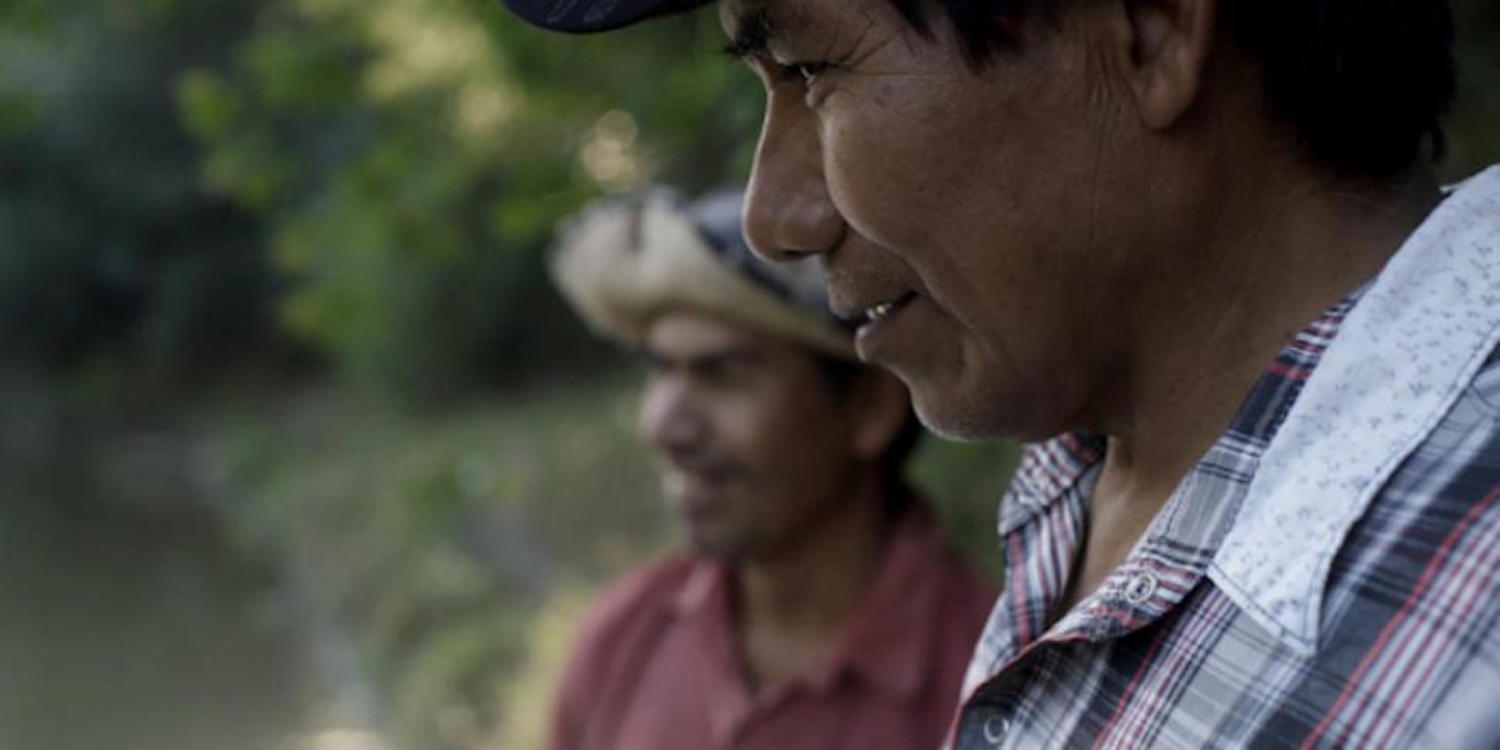
This year’s Sheffield Doc/Fest brought us experimental new masterpieces in storytelling and cinematography, with narratives highlighting the struggle to navigate a rapidly changing world.
New films Mother, I Am Suffocating. This Is My Last Film About You by Lemohang Jeremiah Mosese and The Black Tree (El Árbol Negro) by Máximo Ciambella and Damián Coluccio are astonishing works of art, neither feeling at any point like a documentary.
Both films were screened at Sheffield Doc/Fest, the UK’s best opportunity to delve into the minds of filmmakers around the world. Unlike most documentaries on offer, neither film includes interviews or exposition, or a linear ‘beginning, middle and end’ structure. Rather, by weaving together art, abstract narrative and anger, both films capture stories that feel real, human and haunting.
They are, however, very different films. Mother, I Am Suffocating. This Is My Last Film About You uses grotesque imagery and jarring audio to condemn a nation, and The Black Tree combines mythology and lush cinematography to chart an indigenous community as they struggle for their rights.
This film is not just a final goodbye to Mosese’s mother, the woman who gave birth to him. It is a declaration of emancipation from his motherland. Mosese currently resides in Berlin, exiled from the Kingdom of Lesotho in southern Africa. A visual goodbye to a home nation, his first feature-length film seethes with resentment, anger and deep sorrow.
Memory ripples through the film, which comprises chaotic shots of discarded shoes, abandoned buildings and rubbish dumps interspersed with abstract narrative threads – a silent, resolute and sweating woman dragging a heavy cross through dusty Lesotho streets full of astounded, jeering crowds. A lamb that loses its way from its flock, which we later see skinned, on a butcher’s back, before a crowd of men tear its carcass apart. A mother in a cage-like hut, knitting a thick mask completely over a small boy’s face under a burning sun. Despite there being no common thread linking these moments, there is an overwhelming feeling of being lost, anxious and suppressed.
The scenes are punctuated by a series of goodbye letters, voiced by a female narrator. The letters unspool a narrative that begins with a farewell to a mother, gradually increasing in scope to include a furious defection from a mother nation.
The changes in his perspective begin with his personal relationship to his mother. The narrator recalls adoring her, “You were wearing your blue dress. You were beautiful.” His mother embraced a new religion, leaving behind the adored mother of his memory. Her dresses grew longer, her hair became “too sacred to show”. She once loved Michael Jackson, but all the tapes and books in the house were replaced with sermons and scripture. The change parallels Mosese’s relationship with another cherished mother – his nation – which, when outside of it, he sees differently.
“I saw you through the white man’s eyes. I was ashamed,” the narrator confesses. It is an unexpected, perhaps taboo, message, and one we never truly understand in full. We never uncover what it is about his mother and homeland that forced him away, but his pain and anger are tangible through the blunt, venomous statements.
Mosese has spoken frankly about feeling torn between wanting to criticise his home nation, while not wanting to feed colonial perspectives, describing himself as “a prisoner of political correctness, in a way”.
Suffocating on his own silence, this film is Mosese’s liberation, freeing a voice he felt was silenced from all angles. By bidding his mother and the land, goodbye, he is giving up the need to defend either.
It is a difficult film to watch – a dozen or so people left the theatre at various points throughout the screening. It occupies an unusual, sometimes unfathomable, space between documentary, performance piece and epistle, tackling sentiments that take a while to fully absorb and appreciate. Abstract and palpably painful, it demonstrates the trauma that erupts not only in loss, but in realising there is little space in which to express the breadth of that loss.
[Continued below]
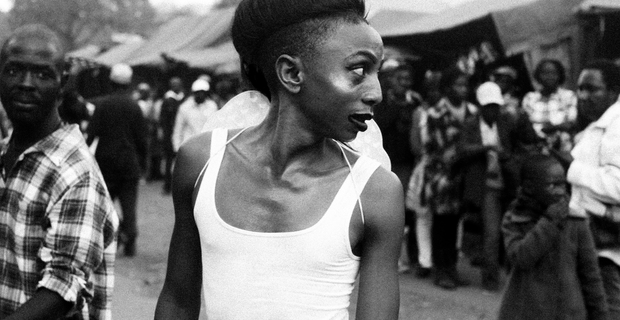
“There was a time when the sky was below, and the earth was above. They say a Great Tree connected them both. Its roots reached the region of the dead, its canopy was mistaken with the sky.”
The Black Tree is a beautiful hybrid of mythology and documentary. Following the struggles of Argentina’s indigenous Qom community, parallels are drawn between the approaching erasure of their community and the reversal of sky and earth in their ancient mythology. This conflation of the supernatural, ancient world to the real and shifting one is a storytelling technique we also see in La Vida En Común, another film about an indigenous community in Argentina screened at Sheffield Doc/Fest this year.
According to the legend of the Great Tree, a great fire disrupted the world, reversing the sky and earth and burning the Tree black. It is said that hardly anyone can remember the Great Tree anymore, but he who finds his way to it will be able to talk to birds, break curses and cure diseases. Farmer Martín Barrios is presented as the man in search of this Great Tree. Facing a fight with the authorities for his community’s rights, and attempting fruitlessly to understand why his goats are dying, finding the Great Tree mirrors his quest to put the balance of the world back in place.
Martín seems to live in an isolated paradise within forests near Formosa, a province in northern Argentina. The cinematography is gorgeous, capturing the lushness of the forests at their most wild, untainted and beautiful. This wilderness is in danger, as corporate agriculture becomes increasingly prominent. Scenes of forests being decimated contrast with the Eden-like panoramas of untouched landscapes, and with the ethereal scenes of Martín’s mystical quest to find the Great Tree.
Yet the slow destruction begins to encroach on the land of the Qom people, presenting further challenges for Martín’s community, who are already marginalised. In the wake of the roadblock of Route 86, a large-scale protest led by the Qom fighting for their lands against agri-business, their political meetings are heavily guarded. We see Martín attend a meeting led by Valentín Suarez, passing a squadron of armoured police watching over the small group of middle-aged Qom people. The community voice an increasing frustration at the erosion of their rights and way of life. Their settlements are often ignored by the government, leading to a lack of adequate schools, electricity supply and even drinking water.
The Black Tree is a masterpiece in storytelling and cinematography. It doesn’t push the boundaries of factual storytelling to the extremes we see in Mother, I Am Suffocating, the abstractness of which may isolate many audiences. Both are beautiful, thoughtful and unique works that tell stories about the struggle to navigate a rapidly changing world, and you should seek both of them out and watch them with an open mind.
Featured: The Black Tree
Body:  Mother, I Am Suffocating
Via Sheffield Doc/Fest