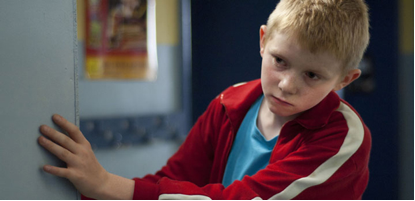
Five film selections from the BFI film festival which you absolutely must track down and watch I always look forward to a dreary overcast Autumn. It’s within this season that the best films of the whole year will be found, and therefore outdoor activities must, out of common decency, cease. Many of the most prominent films featured in the BFI film festival will appear in mainstream cinema so I’ve compiled a list of films which will require a bit of seeking out, as they won’t be handed to you on a massive screen at your local Odeon. Here are five films which are well worth the effort: The Kid With the Bike This film was one of the most moving and touching films I saw. The story, conceived and shot by director-brothers Jean-Pierre and Luc Dardenne follows a young boy abandoned by his father in an orphanage. Unable to come to terms with the idea that his father could abandon him, 11 year old Cyril (Thomas Doret) sets out in search of his father. Early on he encounters Samantha (Cécile de France), a hairdresser who bears a sort of unconditional love for Cyril and offers to act as his foster family. Despite her maternal attitude, Cyril and Samantha’s relationship is not easy, since in order to accept her as his parent he must also accept the fact that his father will never return to him. The film portrays Cyril’s subtle changes in character brilliantly, with every scene underlining Cyril’s struggle to come to terms with his new parent and let go of his father. However the film never gives in to a sensationalist or overly dramatic approach, music is only heard at the end of a scene and monumental turning points come as anticlimactic exchanges between characters. With powerful performances and stunning direction, this film was an easy favourite for me this year.
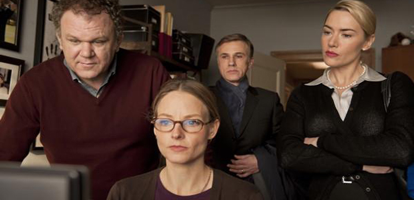
Carnage Kate Winslet and Jodie Foster star in Roman Polanski’s adaptation of Yasmina Reza’s play The God of Carnage. Zachary, the son of Nancy and Alan (Kate Winslet and Christoph Waltz) attacked his schoolmate Ethan with a stick. Ethan’s parents Penelope and Michael (Jodie Foster and John C Reilly) invite Zachary’s parents over in order to sort things out. Yet what begins as a civilised affair soon descends into, well, carnage, as the couples quarrel with each other and between themselves. Hilarious from the outset, Carnage is also a powerful critique of middle class society with its hypocrisies and pretentions. Under supposed selflessness and charity lies egotism, sexism goes hand in hand with the idea of the “perfect” couple, and behind the guise of civility an obscure cruelty towards hamsters is revealed. Carnage is one of those rare comedies that manages to be funny even at its most shocking moments, as hard liquor and even violence become prevalent towards the end of the film. Personally, I find that the most prominent films in the festival are often a gloomy affair (perhaps it’s the type of films I choose to go see), so it was refreshing to find a light-hearted film with plenty of depth and entertainment in Carnage.
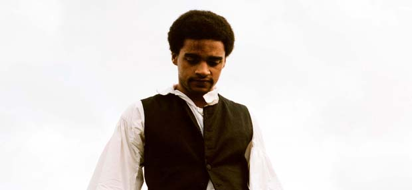
Wuthering Heights Emily Bronte’s classic of love and cruelty has been interpreted in many ways. Andrea Arnold’s adaptation of the novel is definitely the most shocking and interesting version I have come across. Aside from featuring the first ever black Heathcliff (James Howson) the film plays out in a completely different way to most period dramas. Since it follows Heathcliff’s point of view, much of the dialogue occurs in the background. Imagery, landscape and the moors are brought to the forefront, and in some ways a more holistic depiction of Bronte’s novel is achieved. The style of the film therefore emerges as something completely modern. Whereas most period dramas spend much money and effort on décor and costume, the result of extravagant settings often makes the viewer constantly aware of the fact that he or she is witnessing something which is set a century and a half ago. Here, Bronte’s novel is made relevant, the usual barriers are broken down and the viewer begins to understand the humanity of the characters better. If, like me, you’re a fan of the Bronte yet you tire of witnessing endless disappointing adaptations of your favourite books, I recommend you track this film down. It is also to be shown in the Richmond and Chelsea Curzon Cinemas soon.
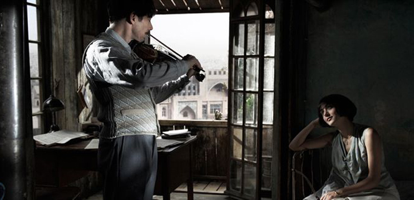
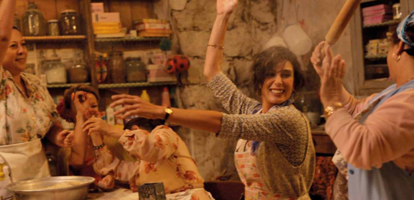
Chicken With Plums Set in Tehran in the 1950s Chicken with Plums is the second film adaptation of one of Marjane Satrapi graphic novels (the first being Persepolis). However, anyone expecting something following in the footsteps of the Iranian cinematic tradition should be told that this is a completely French affair. As the cast and co-director are all French, Chicken with Plums is much closer in spirit and style to the likes of Amelie despite its Persian settings. The film which follows the story of Nasser Ali, who decides to die after his beloved violin is broken, flows in all directions; past, present and future. From the outset you are told that Nasser Ali will die and that he decides to do so due to the loss of his violin. However in the eight days it takes Nasser Ali to starve himself, piece by piece his life is constructed before us. A tale of tragic love unfolds slowly in a most visually stunning and sublime manner. Chicken with Plums is a melodrama about love, loss and art and manages to create moments of brilliance throughout. I felt that Satrapi’s last film Persepolis, despite its artistic beauty, was far too superficial in handling its core themes of religion and politics. However Chicken with Plums has a different feel to it. The political implications exist in the background of the film of course, as it seems to present the Tehran of the 1950s as a sort of idyllic European city. However, the film doesn’t overtly try to put forward political ideas in any way. Art and beauty are brought to the forefront instead. Where Do We Go Now? Nadine Labaki follows her widely successful Caramel with a light-hearted approach to the issue of Muslim-Christian tensions in Lebanon. Where Do We Go Now? follows a small, rural Lebanese village’s struggle to overcome inter-religious strife. Throughout the film tensions and fighting between the men of the village increase while the women of the village form a sort of pact to try and dissuade, distract and manipulate their husbands. The women burn the daily newspapers which bring stories of Christian-Muslim violence and drug their husbands and sons in the name of peace. Even the village Imam and Priest who are unable to control their followers agree to aid the women in their somewhat “sinful” endeavours. I did feel that this film was somewhat disjointed in its movements between comedy, grief and two musical numbers. At points I felt that I might be watching two different films. However, Nadine Labbaki displays a tremendous amount of skill as each comedic scene is handled with so much wit and creativity, while the moments of grief display no less skill and prove just as effective. Although the film is potentially too idealistic or simplistic in outlining the causes of Christian-Muslim violence and solutions to it, some idealism and comedy regarding the subject emerges as a breath of fresh air for the viewer. Above all, this film was a delight to watch, and hence, I had to include it here.