
The perspective
Three scholars preview the London Korean Film Festival for The Platform, which, this year, marks the centenary of the first Korean film made.
Three scholars preview the London Korean Film Festival for The Platform, which, this year, marks the centenary of the first Korean film made.
The Korean Film Festival of 2019 marks 100 years since the first Korean film was made, with special guests including a number of eminent Korean filmmakers. To observe this milestone, the festival will specifically focus on classic cinema from across the century. Other strands include Cinema Now, Women’s Voices and Documentary. We asked a group of Korean cinema scholars from Southampton University to give us their highlights, old and new.
The Korean Film Festival 2019 will take place in various London cinemas from 1 to 14 November, and will then tour cinemas throughout the UK from 18 to 24 November.
Review by Hee-Young Chung
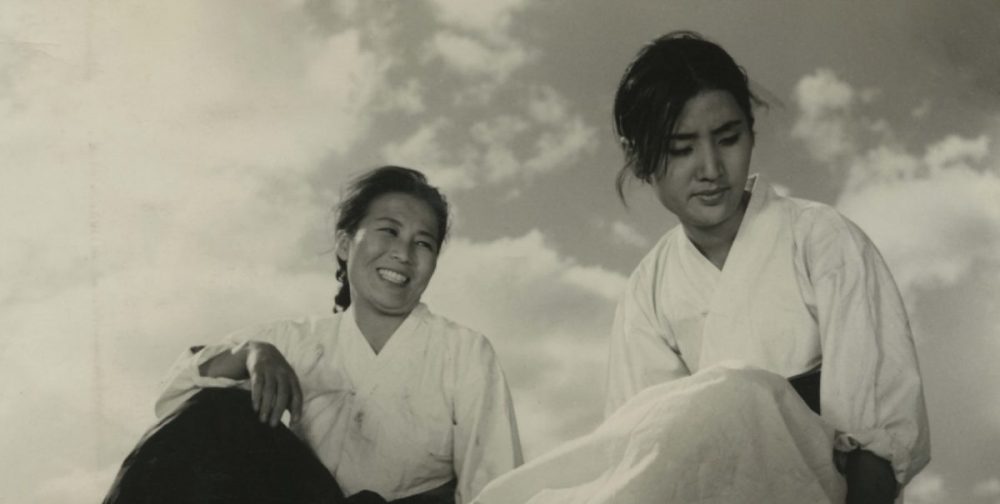
Hae-Soon prays for her husband’s safe return from fishing but, despite this, he drowns. After the funeral, her neighbour Sang-Soo makes advances on her. The young widow rejects him at first but soon accepts his proposal of remarriage. However, Hae-Soon is widowed once more as her new partner falls to his death in the mountains. She returns to the seaside village where her previous neighbours welcome her back.
Reversals of fortune are pivotal to the narrative of The Seashore Village (1965) directed by Soo-Yong Kim, a classic of South Korean cinema and an example of its tendency towards literary adaptation. An even more significant element in this film is its emphasis on depicting the space of the seaside village. Hae-Soon’s interest in and longing for seaside life has nothing to do with the loss of her partners. Her name Hae-Soon can be seen to imply her return to the seaside since one of the meanings of ‘Hae’ in Korean is ‘sea’. The village embraces her again as the sea remains an eternal presence. The seaside village constitutes not only the background of the narrative but also foregrounds the thematic spatiality of ordinary people’s lives.
Part of the festival’s Special Focus: a century of Korean cinema.
Review by Jia Kang
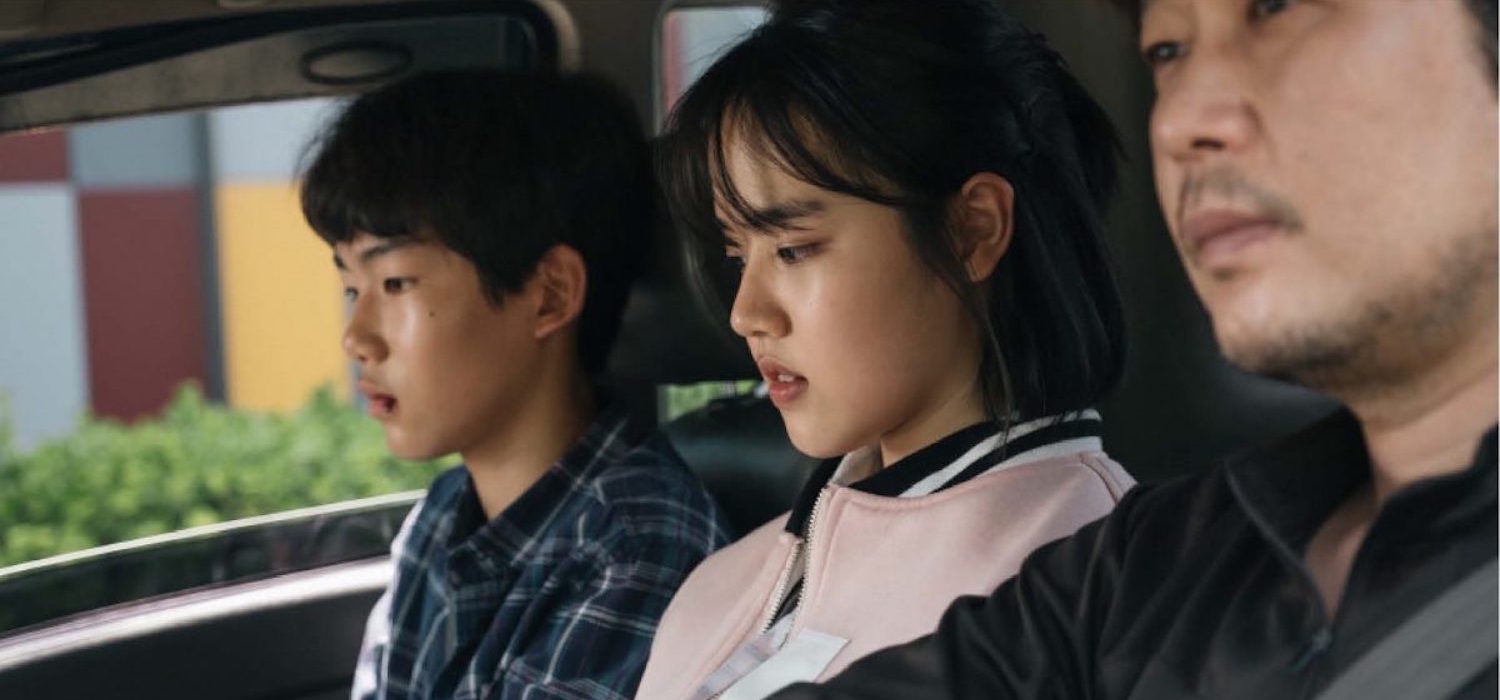
Female director Cha Sung-duk’s debut feature Youngju (2018) is about a 19-year-old girl, Youngju, who takes care of her troublesome younger brother after their parents die in a traffic accident. Yongju is played by Kim Hyang-gi, previously a child actress and star of the Korean fantasy blockbusters, Along with the Golds (2017, 2018).
Revenge is common in Korean films, but Cha directs this film unconventionally. Five years after the accident, Youngju’s younger brother Youngin (Tang Jun-sang) takes part in a robbery and is arrested. She gets the money for his fine from the couple who were responsible for her parents’ death. Youngju decides to stop her vendetta against them, but the film takes an unexpected and tragic turn when a shocking revelation about her real relationship to them occurs.
The film uses the journey of Youngju to save her younger brother to highlight the many difficulties for the younger generation of women living in South Korean society. These include poverty, unemployment, social problems and family breakdown. The depressing narrative presents a continuing dilemma that might leave little space for viewers to breathe, but it is the way in which Cha designs this into a fantasy told from a female perspective that represents the film’s main achievement.
Part of the Women’s Voices strand.
Review by Thomas Humpal
Areum, a sensitive yet distanced writer (Berlin 2017’s Best Actress winner, Kim Minhee), eavesdrops on a series of intertwining conversations and characters revolving around an alleyway coffee house in Seoul. Those familiar with Hong’s naturalistic style and gift for understated plot will not be disappointed in this black-and-white short about the fine line between observation and participation in the sorrow, inspiration and comfort of human connection.
Imposing her observational commentary into each dialogue, the beauty and clarity of her writing, as well as the gradually closing distance to her subjects, this series of repetitions and coincidences illustrate the connections that give us comfort despite the hardships of life.
Among the vignettes: a younger couple (Gong Minjeung and Ahn Jaehong) reconnect after the death of a friend, an older pair (Ki Joobong and Seo Younghwa) discuss winding down, and two writers (Jung Jinyoung and Kim Saebyuk) talk about collaborating. Pretence, pain, and soju (a Korean alcohol) are shared in equal measure. In usual Hong fashion, the lives of creatives are dramatised and punctuated with observational subtlety and thoughtful, personal flair. Comparisons to Hong’s other films are inevitable. However, the barebones cinematography and classical soundtrack ring with rare charm.
Part of the Cinema Now strand.
Review by Thomas Humpal
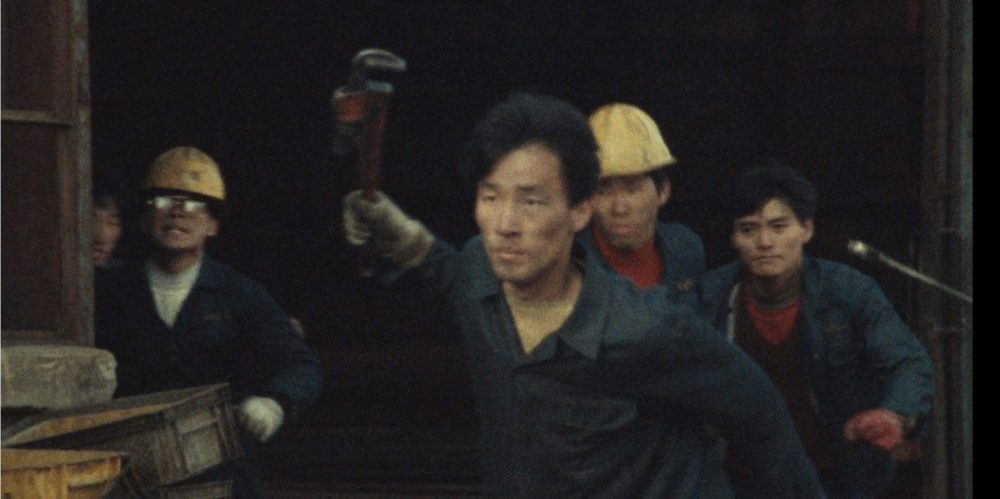
As a forgotten classic of labour cinema, and a film that was forcefully banned by military riot police on university campuses showing it, The Night Before the Strike is an artefact from a time when cinema was a mobilising force for the people, and it inspired change at a time of dubious democracy in South Korea. Two hundred downtrodden steel workers at Dongsung Metal meet their newest co-worker Joo Wan-ik (for Lim Young-gu) and, during his welcoming dinner, a future is forged by the hands of those who dare organise. Each man has his reason for joining and seeking an existence where workers are more than just “machines that keep breaking down”. In a country built on cheap labour, at a time of democracy movements and student protests, the depictions of greed and insidious behaviour by the company directors and managers galvanised the 300,000 Koreans who watched the film under threat of incarceration.
Pulsating with a gritty and unforgiving rhythm, the film not only depicts the organisation of a steel union and their confrontations with the merciless management structure, but does so with an earnestness that cautions equally both fatalism and expectation. This is, in equal part, independent and industrial cinema.
Part of the Documentary strand.
Review by Jia Kang
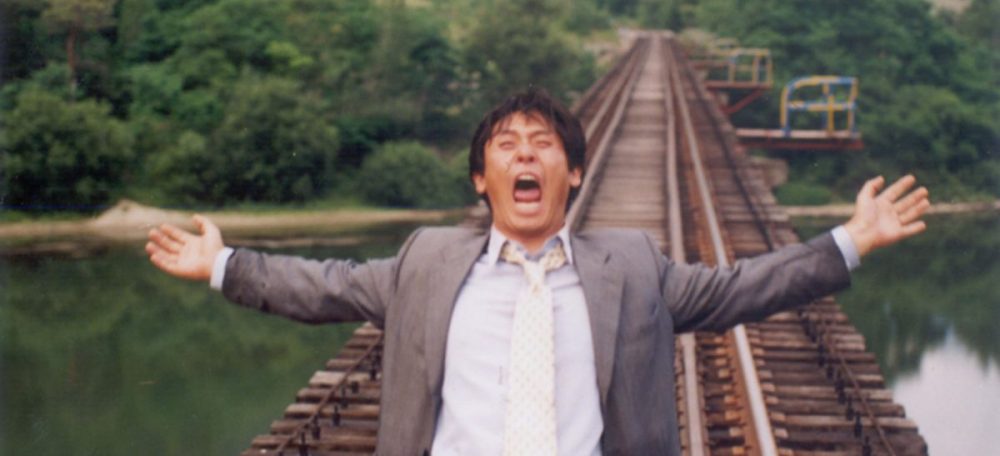
Peppermint Candy (1999) is South Korean auteur Lee Chang-dong’s second drama. It opened the 1999 Busan International Film Festival and was a commercial and critical success. Starting with the protagonist’s suicide on a railway bridge, the film unfolds in flashbacks to the protagonist Yong-ho’s (played by Sol Kyung-gu) personal life, up to the eve of the Kwangju Massacre. This social movement was a watershed in South Korea’s transition from dictatorship to democracy, and the film shows the national traumas behind socio-political change.
Yong-ho is a middle-aged homeless man who is abandoned by his family. In reverse order over 20 years, we see him as a suave businessman, an agitated policeman, and a young innocent man. Yong-ho is confronted with the question of whether life is beautiful. This also serves as the musings of director Lee regarding that troubled time.
However, life is cruel and painful. Yong-ho’s life is full of betrayal, corruption, financial crisis and social crime – but he is remembered by his first, terminally ill, girlfriend. Like the peppermint candy she gave Yong-ho before, his memory of her is the sweetest and purest thing in his life.
Part of the festival’s Special Focus: a century of Korean cinema.
For the full programme, booking, venues and further information, please see: http://koreanfilm.co.uk/.
Hee-Young Chung is a PGR student at the University of Southampton. He’s interested in the representation of breath in South Korean cinema.
Jia Kang is a PhD student at University of Southampton. She is doing research on South Korean art cinema and interested in exploring South Korean art films’ narrative techniques and industrial strategies.
Thomas Humpal is a PhD candidate at the University of Southampton and an assistant professor at Dongseo University’s Im Kwon Taek College of Film and Media Arts in Busan, South Korea.
Photo Credits: London Korean Film Festival website