
Latin American directors shine at the record-breaking Glasgow Film Festival
It was another great year for the Glasgow Film Festival. Launched only in 2005, it has become what many consider the most vibrant film festival in Scotland. With over 42,000 spectators over 12 days, the 2016 GFF closed with its best attendance record ever. Screening 174 films (one of the largest programmes the festival has put together), the GFF kicked off with the UK premiere of Hail Cesar!, the Cohen brothers’ tongue-in-cheek tribute to Hollywood’s golden age. Other highlights included screenings of Dheepan, the 2015 winner of the Palme D’Or at Cannes, and the UK premiere of Anomalisa, Charlie Kaufman’s brilliant stop-motion animation film.
One of the most intriguing films shown at the festival was Chevalier, a poignant portrait of 21st-century masculinity by Greek director Athina Rachel Tsangari. The film, with an exclusively male cast, has for its setting a luxury yacht, on which a group of wealthy angling enthusiasts play a game. The objective of the game is to crown the best among them: the chevalier. The game takes the men beyond the point of no return. They obsessively scrutinise each other, doing their best to show their strengths and to come across as flawless. But the men live in constant fear of appearing inadequate, as they get judged on how they sleep, on their clothes or on the size of their hard-ons. The film ends up providing a complex picture of an absurd male universe dominated by appearance, competitiveness and an obsession with quantifying one’s worth.
The GFF showcased a great selection of Latin American films. Highlights included the 2015 winner of the Venice Golden Lion, From Afar, and Paulina, the fantastic Argentinian film which left many critics in awe at the last Cannes Film Festival.
From Afar is the debut film by Venezuelan director Lorenzo Vagas, whose production team includes, among others, Guillermo Arriaga (the scriptwriter of Amores Perros, Babel and 21 Grams), who also collaborated on the story. Starring Chilean veteran Alfredo Castro and the newcomer Luis Silva, From Afar focuses on the slow-blossoming love affair between a middle-aged dental prosthetics technician (Armando) and a street boy (Elder).
At the beginning of the film, Armando cruises the streets of Caracas in search of young boys. The sex is distant, anonymous: hardly any words are exchanged. The film makes superb use of shallow focus as it follows Armando in the alleys of Caracas. Visually this suggests Armando’s emotional disconnectedness from other people and his surroundings. After Elder is beaten by some thugs and left unconscious, Armando takes him home and looks after him: it is the beginning of a strange father-son relationship in which desire and unresolved childhood traumas make the two protagonists dangerously dependent on each other, until Elder kills Armando’s father.
There is much that remains unexplained: what has Armando’s father done to his son? Who has called the police to arrest Elder as Armando stares at him from afar? Like Armando’s blurred, out-of-focus perspective on his surroundings, viewers are denied a firm grasp on what has happened: we are invited to guess (it is probably Armando who has called the police), but cannot be absolutely sure.
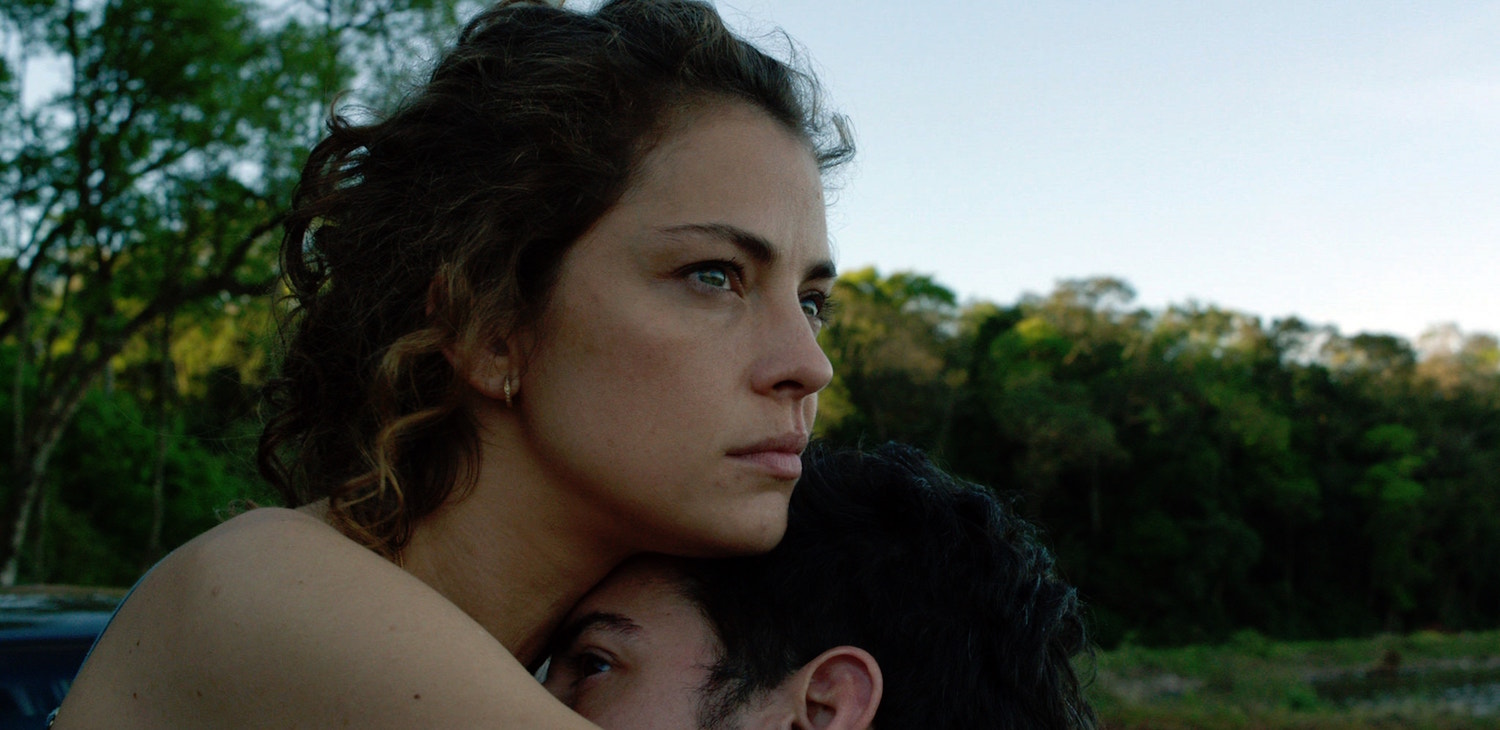
Argentine writer and director Santiago Mitre’s second feature, Paulina, is a remake of Daniel Tinayre’s 1961 film, La patota. The film follows the protagonist (Paulina) as she abandons a promising academic career to move to a rural province and teach politics and social justice to the local kids. Paulina’s new life is far from easy: her students are disengaged and unreceptive. One night, as Paulina rides home after an evening with her friend Laura, she is attacked and raped by a local gang who mistake her for another girl. Paulina soon realises that her rapists were some of her students, but decides not to report them to the police. Through multiple flashbacks, the film keeps retelling the events leading to the attack and the aftermath from different perspectives, as Paulina recounts her traumatic experience to her counsellor and talks to her father about her decision to keep the baby that she is expecting as a result of the rape.
The protagonist’s response to her rape may seem incomprehensible. Viewers may initially identify with her father, who cannot understand her idealistic views. But Paulina’s determination will inevitably challenge them to consider the validity of her staunch rejection of a legal and social-economic system that keeps the oppressed at the bottom, and makes any possibility of redemption and transformation implausible.
The winner of the 2016 GFF Audience Award was Mustang, the brilliant Turkish film about five orphaned teenage sisters, that was also recently nominated for an Academy Award for Best Foreign Language Film. It was a choice that arguably rewarded the efforts of the organisers to internationalise the festival and to offer its audience a high-profile programme that, in terms of quality and number of prestigious films, is certainly comparable to the BFI London Film Festival.
Image from: Paulina / GFF