ESTA TODO BIEN (IT’S ALL GOOD)
Dir: Tuki Jencquel
Review by Sharaiz Chaudhry
Está Todo Bien (ironically named It’s All Good) is a powerful story that puts a human face to the crisis in Venezuela. It reminds us that, while the political posturing by both sides has divided people domestically and internationally, there are very real consequences for the people of Venezuela, who suffer daily as a result.
The documentary follows the stories of several people impacted by the health crisis in the country. By shadowing a doctor, NGO worker, pharmacist and several patients, it provides a multidimensional narrative that seeks to illustrate how different people are affected in different ways by the same issue.
Whether it is through seeing all your colleagues seeking asylum abroad, or having to resort to social media to acquire life saving medicines, the film shows that the ongoing crisis in the country should not be seen as just an ideological battle between the right and the left in Venezuela, but as a very real and tangible everyday struggle.
While portraying a bleak outlook for the country, Está Todo Bien provides a glimmer of hope in the everyday kindness of the Venezuelan people. As a radio host says, “There’s a great sense of solidarity in the country because we are all suffering.” After watching this film, one cannot help but feel that the end of the suffering could not come soon enough.
20 March, 8.45 PM, Barbican
21 March, 7.30pm, Regent Street Cinema
THE CLEANERS
Dir: Hans Block and Moritz Riesewieck
Review by Louis Bayman
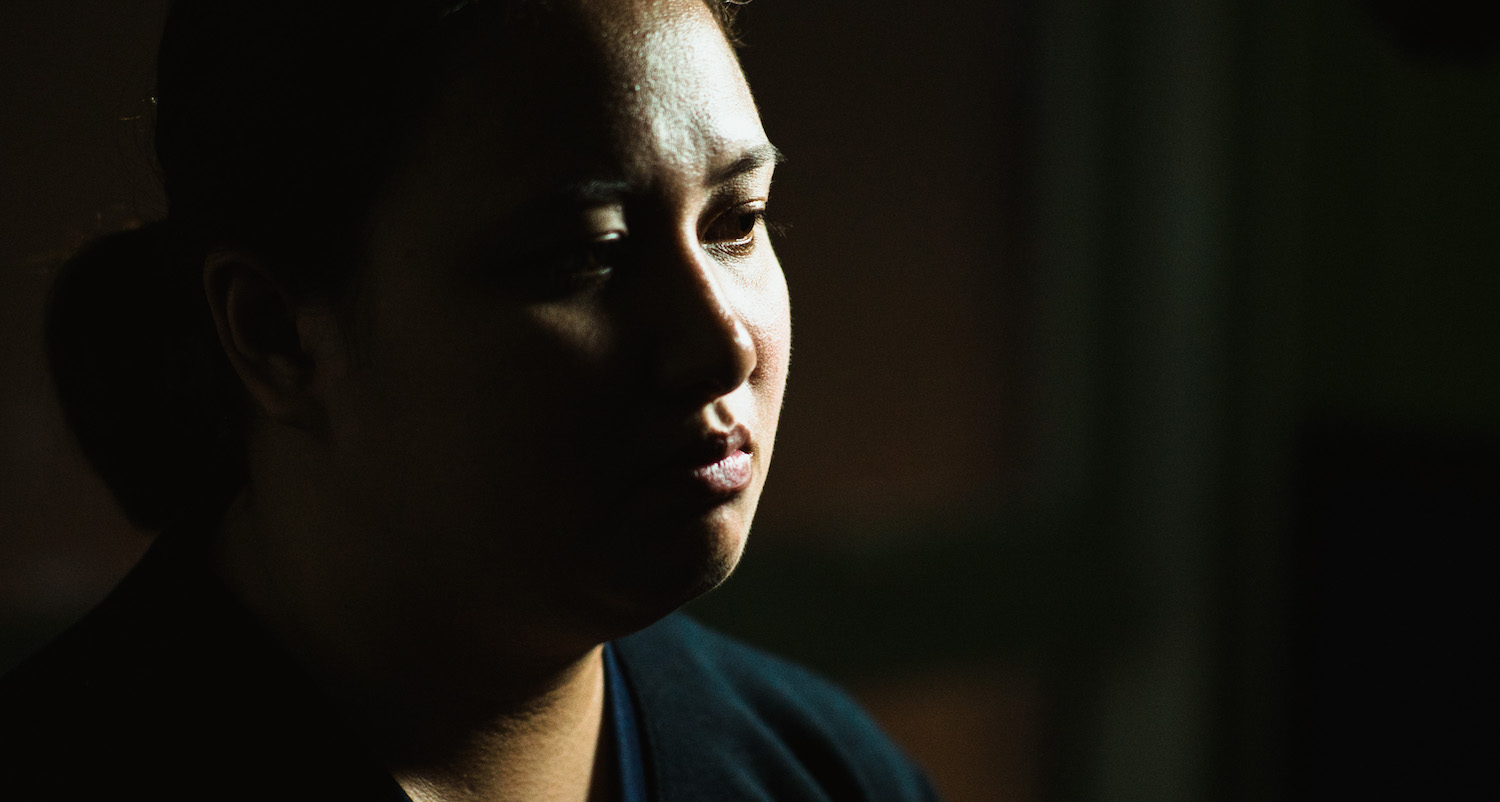
Who decides what you see online, and how? This documentary exposes the world of the content moderators, the people who “do what algorithms can’t”. It is a lonely job, outsourced to firms in the Philippines and operating in the shadows of clients like Facebook and Google. This is a noir-ish realm of workers in isolated office booths lit only by a cold blue screen, who describe themselves as online detectives “cleaning up” the sewers of the worldwide web, where child pornography and terrorist propaganda proliferate.
Social media channels help define contemporary reality, aided by political strongmen from the Philippines’ Hitler-praising Duterte to Twitter’s most famous user Donald Trump. These companies are more likely to follow such figures than any legal, democratic or trading standards, determining for instance what we see from the Syrian war, or removing anything requested by the Turkish authorities, the world’s most avid internet censors. While Facebook and Google avoid doing this undemocratic dirty work, they still gain favoured access to authoritarian regimes’ populaces.
The film also brings up an age-old question for censors. What effect might constant exposure to brutality have on those for whom it is a full-time occupation? “I’ve seen hundreds of beheadings in my life as a content moderator,” says one interviewee, before describing the quality of the wound and amount of blood produced by different decapitation tools. Another worker hanged himself in front of his laptop.
For these corporate saviours of the public good, concern for individual wellbeing is not company policy.
13 March, 6.15pm, Royal Institute of British Architecture (RIBA)
THE FEELING OF BEING WATCHED
Dir: Assia Boundaoui
Review by Fatima Jichi
One community, two decades of FBI counter-terror surveillance, zero convictions for terrorism. The Feeling of Being Watched is a documentary which follows journalist Assia Boundaoui’s investigation into the surveillance of her community in Bridgeview, Illinois, which began in 1990.
Boundaoui takes the FBI to court for access to secret records, which reveal that her community was part of a decades-long investigation, code-named “Operation Vulgar Betrayal”, into money laundering in the US to support terrorist activity in the Middle East. The investigation, she says, extended to all major Muslim organisations in America. During the two decades, the FBI collected data on 600 American Muslim mosques, schools, businesses, charities and individuals across the US, and generated 33,120 pages of records.
The Feeling of Being Watched explores the impact of this surveillance on the community. Boundaoui tells us the story of a friend, later diagnosed with schizophrenia, who complained of being constantly followed, but the community were too paranoid to notice she was in fact sick. She describes a community stuck in the “grey area between paranoia and truth”. Boundaoui shows us how the surveillance contributed to a breakdown of trust between the community and law enforcement.
The documentary centres Boundaoui in the middle of the story she is investigating. Her unique access to community members makes for compelling viewing. The received wisdom is that Muslim communities became “suspects” following 9/11 and the War on Terror. But what is clear from Boundaoui’s documentary is that the Muslim community in the US was under surveillance long before then. As one community member says, “I don’t remember how it felt to just know that I am free in my home.”
19 March, 8.45pm, Regent Street Cinema
20 March, 6.15pm, Barbican