The refugee crisis is the sharpest manifestation of a society lurching dangerously towards authoritarianism.
Mikhail Bulgakov’s lesser-known play Flight articulates the dashed hopes of refugees fleeing their homeland at the height of the Russian Civil War, in a discordant phantasmagoria of horror and humour. At their lowest, they are desperately reduced to racing cockroaches to survive, in the face of a cold apathy from their ‘host’ city in the west.
One hundred years on from that war, refugees themselves are pilloried as cockroaches, as we witness their level of dehumanisation sinking to unprecedented levels – against the backdrop of a rising nationalism that is anti-intellectual and prone to authoritarianism.
Selecting a scenario from the past twelve months that best captures this dehumanisation is no easy task. From immigration policies tearing children away from their families at the border, to politicians voting down basic safeguarding measures, the world is surfeit of examples of cruelty when it comes to the refugee crisis today. “These are animals,” said President Donald Trump last month, as photos of children locked into cage-like detention centres have emerged.
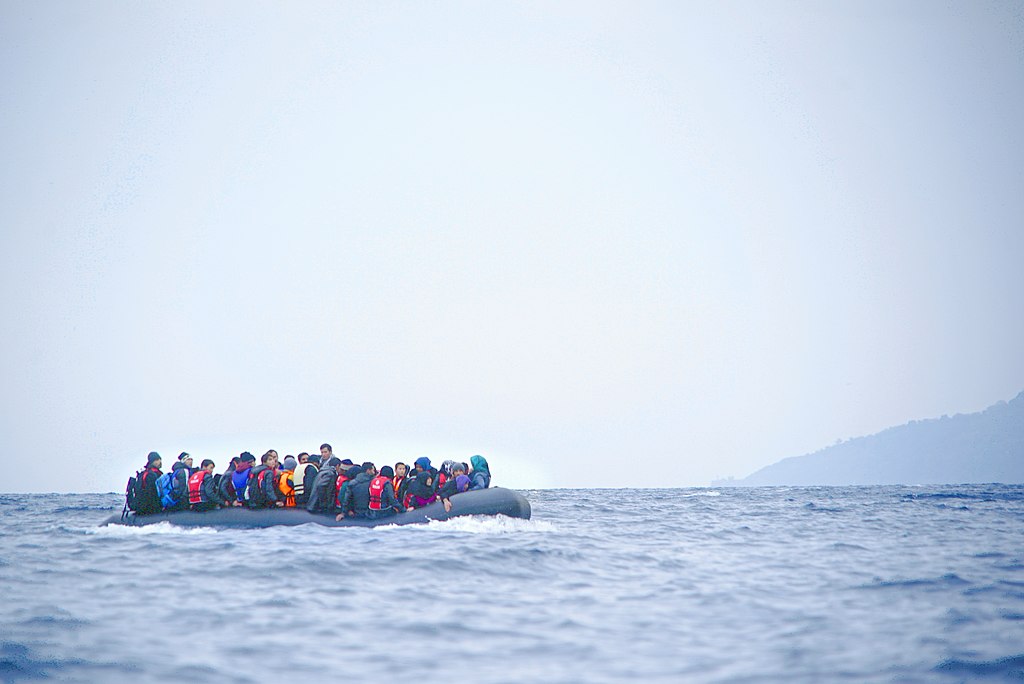
Perhaps one example stands out not just for its cold indifference, but also in demonstrating the sinister triumphalism of the new far right. It is the Italian deputy prime minister, Matteo Salvini, leading Italy, alongside Malta, in refusing to allow a rescue ship carrying 629 asylum seekers to dock. A nightmarish game of refugee-in-the-middle played out in a sea that Europe’s coldness has turned into a cemetery.
Eventually, the new Socialist leader of Spain, Pedro Sánchez, stepped in to avert another humanitarian catastrophe. The Aquarius ship, which counts six pregnant women and 100 unaccompanied children among its weary passengers, embarked on a 1,300km voyage, arriving in Valencia a few days ago. The Italian government, meanwhile, has already moved onto its next immigrant target: mass deportations of the Roma community.
Matteo Salvini, like Rodrigo Duerte of the Philippines or India’s Narendra Modi, belongs to a new authoritarianism spearheaded by Donald Trump and Vladimir Putin. These authoritarianisms have an invariably nationalist inflection: Salvini speaks irrepressibly of “Italians first”; Duerte vows to reprise “Asian values”; Trump wants to “Make America great again”; Modi proudly proclaims himself a “Hindu nationalist” and so on.
Beyond that, however, their manifestation is different from older forms of authoritarianism and, therefore, older forms of resistance appear toothless and suddenly dated. Classic anti-fascist rebukes are ringing hollow with such extreme concentration of wealth and such dislocation away from an imagined communal order of yesteryear. Moreover, whereas the reactionary forces of the right have managed to present the pre-eminence of globalisation as one of national deterioration, progressives have struggled to find a convincing explanation as a counter-narrative.
The refugee crisis is the sharpest manifestation of this dangerous lurch towards authoritarianism – but that also positions it at the vanguard of the resistance. Refugee Week, then, represents an opportunity to work with the refugee sector to carve out a much-needed counter-narrative and redouble our commitment to a humane approach to asylum seekers.
One of the pillars of the resurgence of authoritarianism is the dilution of language. As Yale History Professor Timothy Snyder articulates in The Road to Unfreedom, the Kremlin has served as the epicentre of this philosophy, disseminating a strategic relativism that simply says, “nothing’s really true”. In this context, Trump’s Fake News festers, facts are routinely dismissed as “white noise”, asylum being legal migration becomes irrelevant, and Michael Gove can declare that “people have had enough of experts” – a chillingly anti-intellectual declaration that, history warns us, seldom ends well.
In the present, however, authoritarianism is gaining legitimacy as a popular movement precisely because of this anti-intellectualism. The ideology of a powerful, proud nation returning to its redemptive origins is far more effective in rationalising global disorder than calling for followers to adhere to international UN treatise or heed the forecasts of faceless institutions.
As authoritarian regimes proceed along this path, Snyder continues, the tactic becomes to get into pre-existing fault lines of countries and play on them, whether they are racial or social. In this context, it is easy to see how people of different backgrounds arriving at borders are figured as a threat; they are the perfect low-hanging fruit for the nationalist-authoritarian crusade. The right’s response offers a sense of strength and stability which answers the insecurity felt by many in a period of falling living standards and economic crisis.
The so-called Leader of the Free World can incarcerate children in cells ‘decorated’ with images of himself for crossing a changeable nation-state border, while at the same time announcing he wants “his people” to treat him with the attention that North Koreans pay their dictator. EU leaders can circumvent European Parliament procedures to negotiate a deal with Turkey that turns Greek islands into de facto detention centres, while putting on trial refugee protesters engaging in brave acts of solidarity and opposition.
What is essential now is a vast and coordinated response from progressive forces that must stem from an acknowledgement that the refugee crisis is not going away. Moreover, those who harbour hope that strict border policies will dissuade desperate demographics from seeking asylum need only read one of the hundreds of NGO reports detailing the atrocious conditions they are fleeing to understand what an ostrich view that is. Massacre, sexual violence, torture and imprisonment at home, means the west will be a magnet for asylum seekers however many miles of barbed wire we dress our borders with.
Only a proud internationalism and uncompromising approach to open borders can push back against the rising tide of authoritarianism fuelled by nationalism and anti-intellectualism. It is a battle we should go into with a determination to transform the legacy of the Mediterranean Sea from a bleak graveyard to a reservoir of hope – it is the least we owe to those who embarked on the courage of odyssey and never arrived.
Photo Credit: Wikimedia Commons
