
Filmmaker Patricio Henriquez constructs a crushing yet compassionate documentary on an oppression faced by an already persecuted and globally neglected community
It is perhaps a fitting irony that Patricio Henriquez’s Uyghurs, Prisoners of the Absurd, screened at the London Human Rights Watch Film Festival 2015, was hosted first at Curzon Soho. The trendy cinema hall is located at the very doorstep of Chinatown, its entrance leading out directly onto that popular tourist spot off London’s Leicester Square.
And why shouldn’t it be an irony. The Uyghurs are a persecuted minority in a region annexed by Chinese communist forces in 1949; for many years this Muslim community has been subject to oppressive religious suppression by China’s government. Sharon Hom, executive director of Human Rights in China, observes, “As Islam is perceived as underpinning Uighur ethnic identity, China has taken draconian steps to smother Islam as a means of subordinating Uighur nationalist sentiment.” While a peaceful resistance remains, Uyghur resistors are expediently labelled terrorists by the authorities and subject to arrest, imprisonment, torture and execution as the world turns a largely blind eye. As director Henriquez stated following Sunday’s screening, “the Uyghurs are similar to the Tibetans, except they do not have the Dalai Lama so no one pays attention to them.” It is for this reason such a film and its hosting by Human Rights Watch is so vital. Awareness is key to efforts for justice and change, and Uyghurs, Prisoners of the Absurd is an important part of that project.
In a number of ways, however, this film is as unexpected as it is revelatory. I attended with the anticipation of encountering a prominent narration on Uyghur social and cultural history, and their struggles with China. The film, however, spends little time on this. Instead, attention is on a lesser known egregious oppression of an already little known and neglected people: the wrongful incarceration of Uyghur refugees at Guantanamo Bay. Although initial expectations were somewhat dashed, this turn of the tale was crucially eye-opening. This is in itself a commendable aspect of the film, but further it meant that several associated causes – from the violations of the War on Terror to the illegality of Guantanamo Bay – are also addressed.
What emerges is a narrative that, while centering on the human experiences of the victims, accessibly navigates the disturbing and complex geopolitical and economic realities, hypocrisies and expediencies fueling the War on Terror that has defined so much of our world for well over a decade. Crucially, it also reveals the clout held by Chinese authorities over western governments. Evocatively produced with original photography, and told through the first-hand accounts of three detainees with the courage to speak – Ahmet Abdulahad, Abu Bakker and Khalil – as well as other key figures including their interpreter and lawyers, the film weaves a harrowing tale of trauma, dashed hopes, crushing betrayals, but, ultimately, survival with humanity and compassion intact. It traces the paths of a people oppressed at home, seeking refuge and liberty abroad, yet finding themselves circumstantially caught in the desperate violence of war and, as one detainee put it, turned into pawns on a political chessboard.
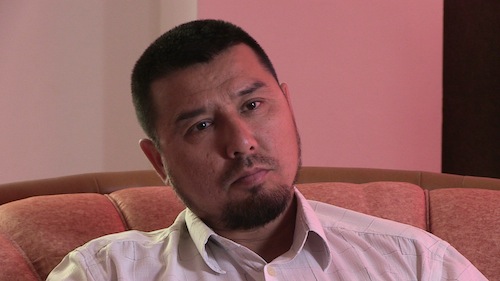
Perhaps a perfect example of the complexities lies in one stark reality revealed by Abu Bakker: prior to the War on Terror, Afghanistan was the only nation willing to accept Uyghur refugees. The Taliban offered protection when no other nation did, and so many Uyghurs sought refuge from Chinese persecution with this one state willing to have them. Abu Bakker relates how even when they could not work and earn, the Taliban ensured they had three meals a day: “I was grateful to them, and I still am.” He and other refugees formed a small Uyghur village in Afghanistan where they spent their days studying the Qur’an, a right denied under Chinese authorities. Yet when the US-led war broke out, the traumatised men found themselves caught up in the middle and forced to flee to neighbouring Pakistan. There they encountered the first of many betrayals that led to their detention.
The Uyghur men presented are indeed prisoners of the absurd: the absurdity of dictatorial imperialist minds, the absurdity of the farcical War on Terror, the absurdity of immoral political expediency – and the absurdity of our ignorance. But from that sea of the absurd, what remains the most powerful reality of this documentary is the searing humanity and compassion of those at its centre. The gentle, softly spoken men who narrated their ordeals with no trace of bitterness even as they emanated the silent sadness of betrayal. These were people who believed in the US as a land of democracy: liberty, principles, justice. They expressed their hope when wrongly detained that the Americans will not mistreat them as the Chinese did in their jails, and revealed their astonishment when they found the Americans no different: “we couldn’t believe they were Americans.” Long after arrest, when finally informed at Guantanamo about the reason for their detention and the events of 9/11, they all expressed shock, commiserations for the victims and rejection of that criminal act as against Islam.
Today, after languishing in abusive and illegal conditions in Guantanamo for years despite being cleared as innocent, after being separated from their families – mothers, siblings, spouses – for almost a decade, after having their hopes for liberty dashed time and again, after having their dignity destroyed, after finally being released yet in alien lands as stateless citizens without passports and constantly shadowed by the “terrorist” stigma, they continue without resentment and with a continued respect for the very nation that subjected them to the loss of their prime years and futures. Through protracted incarceration, abuse and suffering they remain without hate.
Creatively constructed and humanely portrayed, Uyghurs: Prisoners of the Absurd ultimately reveals itself to be a film saturated with hope: hope for the survival of compassion, for the continuation of goodness and for the powerful resilience of the human spirit. That alone may make it worthy of watching. But the greater reason is to know; to never plead ignorance.
The Guantanamo Bay detention facility has been open for 14 years. More than 100 men remain detained there without charge or trial. A total of 779 men have been held there over the years, 22 of them ethnic Uyghurs from China. The US government has determined that the Uyghurs should never have been picked up to begin with, but dysfunctional US politics and lack of political will kept them locked-up unlawfully for many years. The last of the Uyghurs were finally released from Guantanamo at the end of last year, but their stories—and those of hundreds of other men unlawfully held there—are tragic examples of a US counterterrorism policy that violates rights, sets a terrible example for other countries, and undermines the rule of law.
– Human Rights Watch
The London Human Rights Watch Film Festival runs from 19 – 27 March 2015. Full details can be viewed here. The trailer for Uyghurs, Prisoners of the Absurd can be viewed here.
In conjunction with Human Rights Watch, MUBI is now offering a free 30-day trial including selected films from the festival.
Photo Credits: Uyghurs, Prisoners of the Absurd