
Dieter Kosslick leaves a distinctive legacy that has turned Berlinale into a celebrated and diverse film festival
Following the Weinstein affair and the rise of the #metoo movement, a raft of gender equality campaigns have sprung up across various segments of the film industry. Last May, 82 female filmmakers marched in protest on the red carpet at the Cannes film festival demanding concrete measures to achieve greater female representation in the industry. The response of some of the major film festivals to these demands has been disappointing. Of the 21 films competing at the 2018 Venice film festival only one was directed by a woman, Jennifer Kent. Even Cannes, whose line-up last year included the highest number of female filmmakers since 2011, selected only three films directed by women in the main competition.
The 2019 Berlin film festival (Berlinale) showed that, finally, something is changing. Almost half of the 400 films screened at the festival were made by women, with seven (out of a total of 16) of them included in the main competition. Having opened with a pledge signed by the festival’s director Dieter Kosslick to promote the work of women in the industry, the festival featured a number of events addressing questions of inclusion and diversity in film and television. Over the years, the Berlinale has established itself as a unique platform for politically engaged cinema. Attracting massive crowds in different venues sprawled all over the city, the 2019 edition did not disappoint festival goers in search of challenging discoveries.
Some of the films shown in the main competition line-up openly foregrounded their socio-political concerns: Francois Ozon’s By the Grace of God, which went to win the Silver Bear, tackles the complicity of the Catholic Church in a recent child sexual abuse scandal in Lyon, while Claudio Giovannesi’s Piranhas, based on Roberto Saviano’s novel, exposes the plague of teen gangs in Naples by charting the descent into organised crime of a group of young boys. Giving the Silver Bear for Best Director to Angela Schanelec for her I was at Home, But, the Jury presided by Juliette Binoche recognised the extraordinary achievement of a filmmaker who has shown that one of the most poignant political commentaries a film may make these days is one that addresses the changing structure of the family under late-capitalism and the experience of women within this.
One of the most captivating films in the main competition was God Exists, Her Name is Petrunya, by Macedonian director Teona Strugar Mitevska, whose politics were intelligently filtered through the lens of tragic-comedy. Played by Zorica Nusheva, the film’s titular protagonist is an unemployed 32-year-old still living with her parents. After a humiliating job interview during which her potential employer tells her that he finds her so unattractive that he would never offer her a job nor make sexual advances to her, Petrunya finds herself in the middle of an Orthodox ceremony. A noisy crowd of men are about to dive into the river to retrieve a crucifix thrown by the priest. Catching us totally unprepared, Petrunya impulsively throws herself into the water and gets it. The men are furious. Petrunya escapes but is eventually found at her parents’ home and taken to the local police station.
In some of the film’s most poignant moments, we see Petrunya sitting calmly in the interrogation room, as she faces several officers and the local priest who try to bully her into returning the crucifix. Seemingly unaffected by some of the officers’ insults, Petrunya cleverly unravels their manipulative interrogation tactics. Other times, she just remains silent, looking unimpressed by their dull, sexist remarks. A biting satire on men’s self-entitlement, the film cleverly weaves comic scenes marked by a quiet, steely humour with terrifying mob scenes involving the village’s men outside the police station. Also thanks to Nusheva’s brilliantly atonal performance, God Exists, Her Name is Petrunya turns out to be a moving tribute to the quiet resilience and the obstinate determination of women who will not give up what they have deservedly earned.
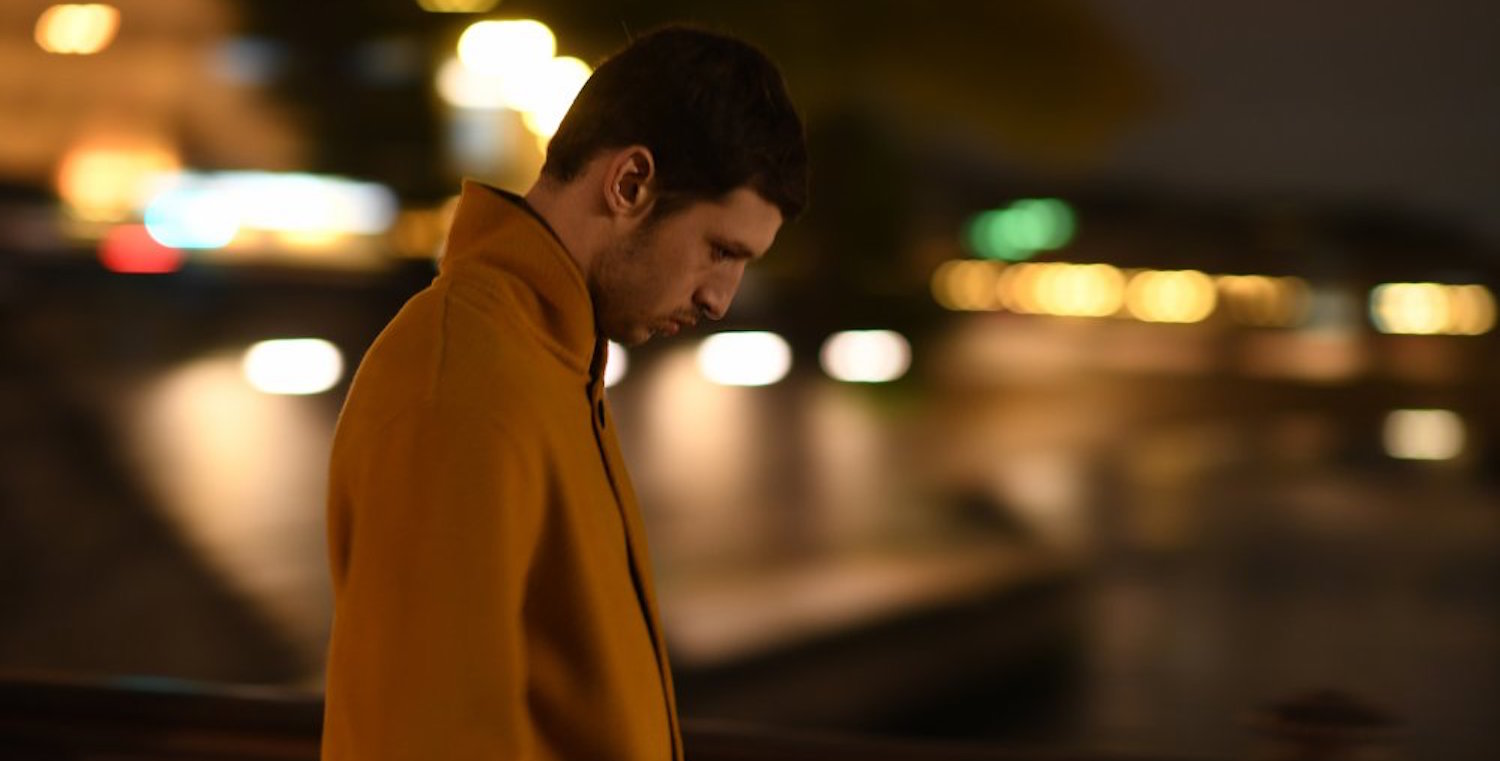
The Golden Bear for best film went to Synonyms. Directed by Israeli filmmaker Nadav Lapid, it follows Yoav, a young man arriving in Paris, determined to leave his Israeli identity behind. The film’s narrative often feels like an erratic flow of perplexing scenarios with unclear character motivation and patchy plot logic. Refusing to speak Hebrew in this new city, Yoav buys a French dictionary. Through synonyms, Yoav expresses to his friend Emile how he feels about his homeland: abominable, loathsome etc.
In one of the most captivating moments of the film, Yaron, an Israeli intelligence agent that Yoav has befriended, convinced that Europe is profoundly anti-Semitic, angrily confronts the Paris metro travellers with his Jewishness. While this poignant moment may be read as a critique of contemporary Israel’s persecution complex, the muted, embarrassed response of the travellers who look away, also raises for us the suspicion that Yaron may, at the same time, not be so far off an inconvenient truth.
In trying to replace his Israeli identity with a new one, Yoav discovers that national identities are synonyms – the bloodthirsty words of La Marseilles that he sings during his cultural integration class being not so different from the hawkish Zionist tone of the Israeli anthem that he starts singing immediately after. A film on the difficult, perhaps impossible, attempt to escape one’s heritage, Synonyms is also a brilliant satire of Europe’s sense of self-importance and of its feelings of cultural superiority, which Yoav shines a light on through his Parisian encounters.
Öndög, directed by Chinese filmmaker Wang Quan’an, was this writer’s festival favourite. Set in the Mongolian steppe, it starts with a police car stumbling on the body of a naked woman unmistakably dead. One may get the feeling that this is the beginning of a Ceylan-esque rural murder mystery. A young police officer is left behind in the windy steppe to keep an eye on the body. The camera stays away from him, and we come to realise that this lonely figure in the majestic landscape is setting up the prevailing tone of the film.
While the murder mystery is eventually solved off-screen, viewers are confronted with a series of stunning long takes in which the place of humans appears secondary to the overwhelming power of nature. Far from being a mere backdrop for the lives of the herds people who inhabit this enchanting landscape – with its gorgeous twilights and the hypnotic sound of its winds – Öndög invites us to reconsider our efficiency-driven approach to the experience of time and space. A solitary herdswoman, nicknamed ‘the dinosaur’, accompanies us to the everyday routines of this remote world: the slaughtering of a lamb, the birth of a calf, or the silent smoking of a cigarette. The inner world of this herdswoman may seem impenetrable. We are never quite sure how she feels about the young man she ends up having sex with or about her unexpected pregnancy. Like a dinosaur, she is struggling for survival, but it is a struggle that seems to be constantly reliant on the wisdom of nature.
This has been the last year of the Berlinale under Dieter Kosslick’s direction. Kosslick leaves a distinctive legacy that has turned Berlin into a much celebrated audience-oriented festival. The two new directors, Carlo Chatrian and Mariette Rissenbeek, face the challenge to revamp a festival that many people hope will be even more ambitious and open to experimentation. One can only hope they will also remain committed to the festival’s pledge to fight the devaluation of women’s labour within the film industry by following up on the impressive legacy felt by this year’s edition.
Photo Credit: Synonyms / Berlinale