
Britain has a responsibility to address the hardline measures that China has adopted in Xinjiang
As Chinese state media reported last week, the new Foreign Secretary Jeremy Hunt is in China today. No doubt trade and international security will be high on his agenda, but he should also find the courage to speak up about human rights and the repression of Uyghur Muslims.
China is one of 30 “human rights priority countries” identified by the UK Foreign Office. Their annual report, Human Rights & Democracy, published this month, describes significant human rights concerns regarding China. It states, “In 2017, there was increased evidence of civil and political rights being infringed in China, and of space for civil society being tightened further.”
The report describes severe restrictions on freedom of expression across China, with the right to freedom of religion coming under particular pressure: “There were continued reports of the detention, harassment and persecution of religious groups – including Christians, Muslims, Buddhists and Falun Gong practitioners – and of the destruction of religious buildings.”
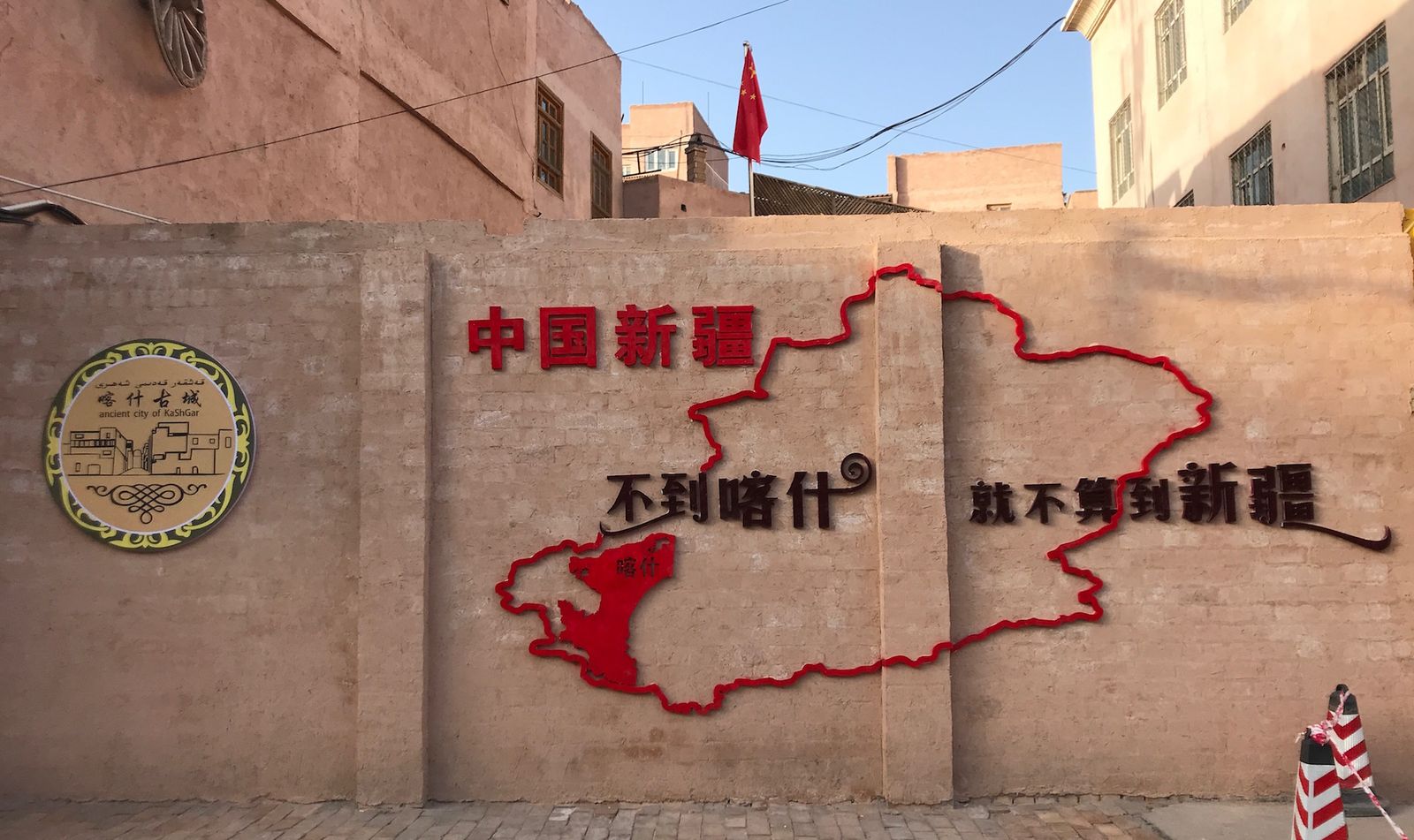
A growing area of concern is the persecution of the Uyghur people in China’s north-western region of Xinjiang, the biggest region in China – to the north of Tibet, and bordered by Mongolia, Russia, Kazakhstan, Kyrgyzstan, Tajikistan, Afghanistan and India.
The area was incorporated into the People’s Republic of China in 1949, but it has a distinct identity and culture. It is the home of the Uyghur people, who are ethnically Turkic and practise Islam, and who refer to it as East Turkestan.
It is also of immense strategic importance to China, being rich in natural resources, including uranium, natural gas and oil. It provides access to central Asia, an area China is increasingly seeking to influence as part of its Belt and Road initiative.
The Chinese government has encouraged Han Chinese to settle in Xinjiang, changing the ethnic make-up of the region. In 1949, Han Chinese made up around 6 per cent of the local population, whereas by 2011, this had risen to 38 per cent.
They have adopted increasingly restrictive policies towards the Uyghur people since the riots in 2009, where at least 200 people are reported to have died. Many of those who were killed were Han, and tensions between the Uyghur and Han populations remain high.
As the FCO’s Human Rights & Democracy report notes: “In Xinjiang, the authorities introduced intrusive security and surveillance measures and cultural restrictions targeted at the Uyghur Muslim population. Thousands of Uyghurs were held in re-education camps after returning from abroad.”
These techniques are nothing new for Chen Quanguo, who was installed as the new Communist Party chief in Xinjiang in 2016. He had previously overseen a tough new security regime in Tibet and has brought his hardline approach to the region, along with massive increases in spending on police and security personnel. This has meant grid-style policing and deeply intrusive surveillance, using both technology and human sources. As one writer puts it, “Xinjiang is the nightmarish extreme that the new technology makes possible: a racist police state.”
Amid these concerning measures, the UK government are particularly interested in Xinjiang. In 2015, then Chancellor George Osborne visited Urumqi, Xinjiang’s capital, being the first British minister to visit the region. Following him, former Prime Minister David Cameron is now leading a £750 million government-supported investment fund, designed to capitalise on the Belt and Road initiative.
Re-education camps
The latest, and perhaps the most disturbing development to come to light, is the internment of Uyghurs and other ethnic minorities into “re-education camps”. Inmates are subjected to political indoctrination, and those who do not comply risk isolation, being denied food and water, and even physical punishment. These camps get a brief mention in the Foreign Office’s report, but the suggestion is that only Uyghurs who have travelled abroad are interned – which is incorrect.
The Chinese government denies the camps’ existence, but Dr Adrian Zenz of The European School of Culture and Theology in Germany has used the government’s own records to demonstrate that facilities have been built to detain people right across Xinjiang. By some estimates, as many as one million people have been detained. Children are being sent to orphanages because there are no adults left to look after them.
Jeremy Hunt is an admirer of Chinese culture and is likely to get a warm welcome. No doubt he will want to do business on his visit. But he must do the right thing and speak up about Xinjiang too.
Photo Credit: A W Khan